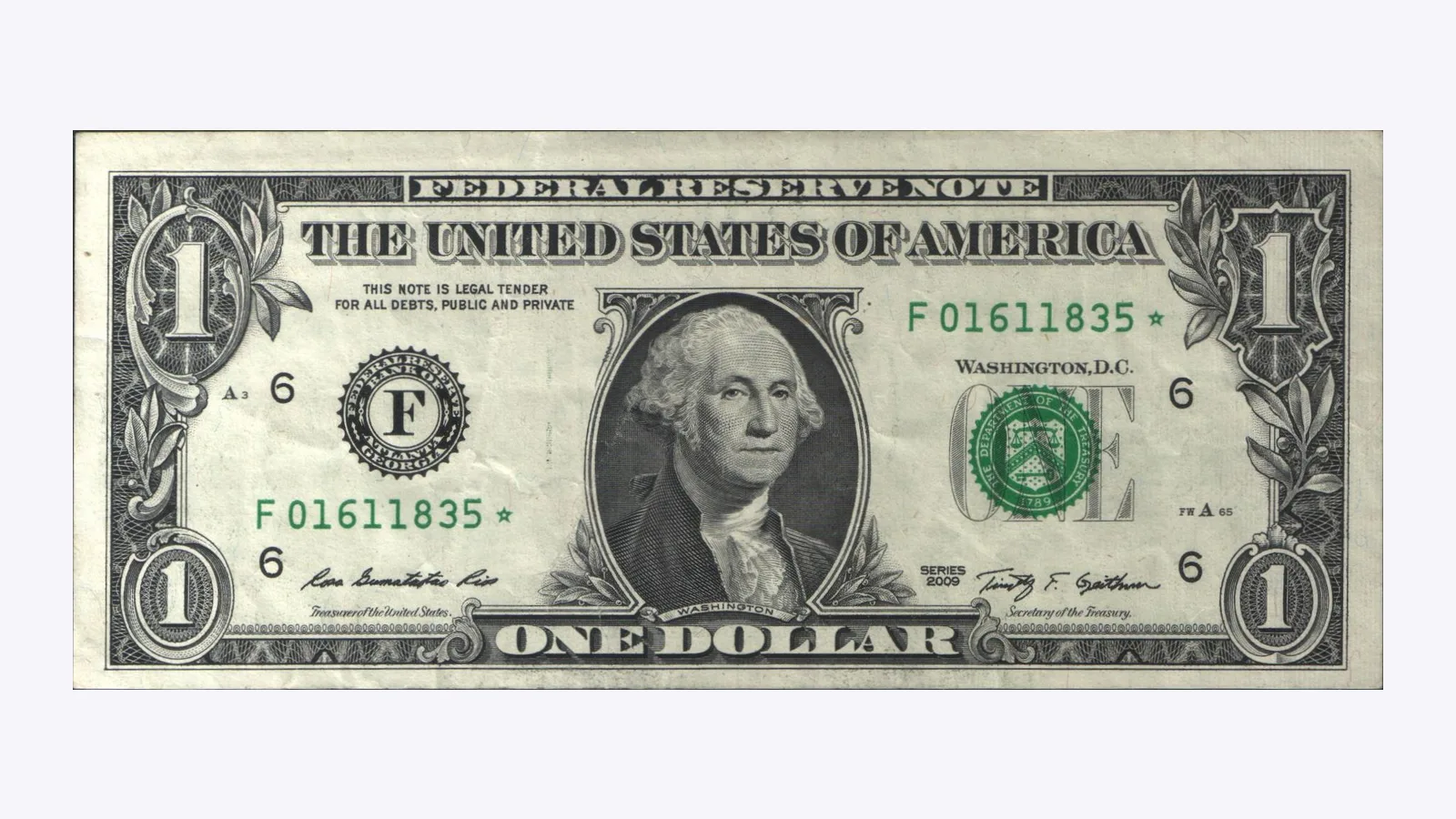
A star note is a replacement bill, not automatically a rare one. Whether yours is worth more than face value comes down to one number: how many notes were printed in its run. Here is how to find that number and what it means in dollars.
What the star means
When the Bureau of Engraving and Printing finds a misprinted sheet, it does not reprint the same serial numbers. It swaps in a replacement sheet. In the BEP's own words, a star note "has its own special serial number followed by a star in place of a suffix letter." The star is a production record. It tells you a sheet went wrong somewhere, and nothing more.
That is why the most repeated claim about star notes, that every one is valuable, is only half true. Stars are less common than regular notes, so they usually sell for a little over face. The ones that sell for real money come from small print runs, and you cannot tell a small run from a big one by looking at the bill. You need the lookup.
Read the note before you look anything up
Every piece of information a star note lookup needs is printed on the front of the bill. Write these five things down first. A lookup without the bank letter is a guess.
| What you need | Where it is | Example |
|---|
| Denomination | Corners and center of the note | $1 |
| Series | Small print near the portrait. On modern notes the first letter of the serial also corresponds to the series | Series 2017A |
| Federal Reserve Bank | The second letter of the serial. On $5 and higher it matches the small letter and number indicator printed on the note | B = New York |
| Serial number | Printed twice on the front. Eleven characters in total on a modern note | MB 01234567 ★ |
| Star position | End of the serial on modern Federal Reserve Notes. Front of the serial on older silver certificates and United States Notes | ★ at the end |
What a star note lookup actually checks
The BEP does not run a public serial search. Its serial number page explains what serials are and stops there. The lookup tools collectors use, such as the MyCurrencyCollection star note lookup, are built from BEP production reports. You enter series, denomination, bank and serial. The tool finds the print run your note came from and tells you how many notes were in it.
Run size is the whole game. These are the reference points MyCurrencyCollection uses:
| Run size | What it means for your note |
|---|
| 3,200,000 | The largest run size. Full runs produce the stars you find most often in change. Expect face value plus a small premium. |
| 640,000 or fewer | The line where collectors start treating a star as rare. |
| 320,000 to 640,000 | The usual size of a small run. |
| 16,000 or fewer | Some runs were printed this small. These are the notes collectors actively hunt. |
Their definition of truly rare is stricter than "small run". The hardest stars to find come from runs of 640,000 or fewer that were also the only star run for that series, denomination and bank, in an older series. A small run in a series that also had several full runs is easier to replace, so it carries less of a premium. Collectors chasing a complete set of runs need one of each, which is what creates the demand in the first place.
How to read the result
A lookup gives you a run size and, usually, how many star runs exist for that same series, denomination and bank. Put the two together:
| Lookup says | What you have |
|---|
| Run of 3,200,000, several runs for the same combination | A common star. Face value plus a small premium in circulated condition. |
| Run of 640,000 or fewer, but other runs exist for the same combination | Scarce. Worth checking sold listings for that exact run before you spend it. |
| Run of 640,000 or fewer, the only star run for that combination, older series | The profile of a rare star. Condition now decides whether it sells at the bottom or the top of its range. |
| No match found | Recheck the bank letter and series. On an older note with the star in front, you likely have a silver certificate or United States Note. Value those by series and grade first. |
Grade matters as much as the run, so be honest about it. "Uncirculated" means no folds at all, not even a light one through the middle, sharp corners and original crisp paper. A note that has spent one week in a wallet is circulated. Most people grade their own notes one or two steps too high, and buyers price from the photo, not the description.
Star note value: what they have actually sold for
These figures come from the US Currency Auctions star note price guide. They are calibration points, not a quote for your note. The district matters because each row is one specific run.
| Note | Circulated | Uncirculated |
|---|
| 1963 $1 Federal Reserve Note star | $2.50 to $7 | $10+ |
| 1974 $1 Federal Reserve Note star | $9 to $20 | $30+ |
| 1981 $1 star, Philadelphia district | $15 to $40 | $125+ |
| 1988 $1 star, Atlanta district | $100 to $350 | $1,000+ |
| 1981A $5 star, Minneapolis district | $400 to $600 | $1,000+ |
| 1969B $20 star, Kansas City district | $125 to $175 | $750+ |
| 1966 $100 United States Note star | $300 to $800 | $1,800+ |
Two patterns stand out. First, condition multiplies everything: uncirculated examples bring several times the circulated price, up to ten times in the 1988 row. Second, age alone does nothing. The 1963 $1 is 25 years older than the 1988 Atlanta $1, and the 1988 note is worth many times more. That gap is the run size, not the date.
The same guide is blunt about the floor: star notes "most always bring a small premium above face value," but "a heavily worn or damaged modern star note may not always be worth more than face value."
$2 stars and silver certificate stars
Two places where the rules shift.
$2 bills. Here the series matters as much as the run. A star on a 1976 Bicentennial $2 is a different market from a star on a 1928 red seal. Our $2 bill serial number lookup lists star ranges for every series from the large-size notes to the current one, with circulated and uncirculated prices kept separate.
Silver certificates. Blue seal notes put the star in front of the serial instead of at the end. Run size still matters, but series and grade drive most of the price. The silver certificate value guide covers what each series is worth.
What to do with the note in your hand
| You have | Do this |
|---|
| Circulated modern star from a 3,200,000 run | Keep it as a curiosity or spend it. A dealer will not pay much over face. |
| Circulated star from a run of 640,000 or fewer | Check sold listings for that exact series, denomination and bank. List it with clear photos of both sides and the serial. |
| Crisp, never folded star from a small run | Put it in a currency sleeve now. This is the only case where third-party grading usually pays for itself. |
| Star with a pattern in the serial | Two premiums stack. Check the fancy serial number list before deciding. |
| Old note, star in front of the serial | You have a silver certificate or United States Note star. Value it by series and grade first, run second. |
Mistakes that cost money
- Washing, pressing or flattening the note. PMG withholds its EPQ (Exceptional Paper Quality) designation from notes that have been washed or pressed. Leave folds alone.
- Pricing from asking prices. Asking prices on star notes run far above what they actually sell for. Filter by sold listings.
- Skipping the bank letter. One series and denomination can have several star runs from different banks, with very different sizes.
- Ignoring the rest of the serial. A star with a low serial or a radar is a better note than either alone.
For the wider picture on old bills, including notes with no star at all, start with the paper money value guide.