What Are Your Paper Bills Really Worth?
Paper money collecting, notaphily, encompasses everything from common circulated bills to incredibly rare notes worth millions. Value Identifier's AI identifies denominations, series, signatures, seal types, and error varieties to price your paper currency across the full spectrum of collectibility.


Try it free, identify any item
Snap or upload a photo and get its value in seconds
Why knowing your Paper Money value matters
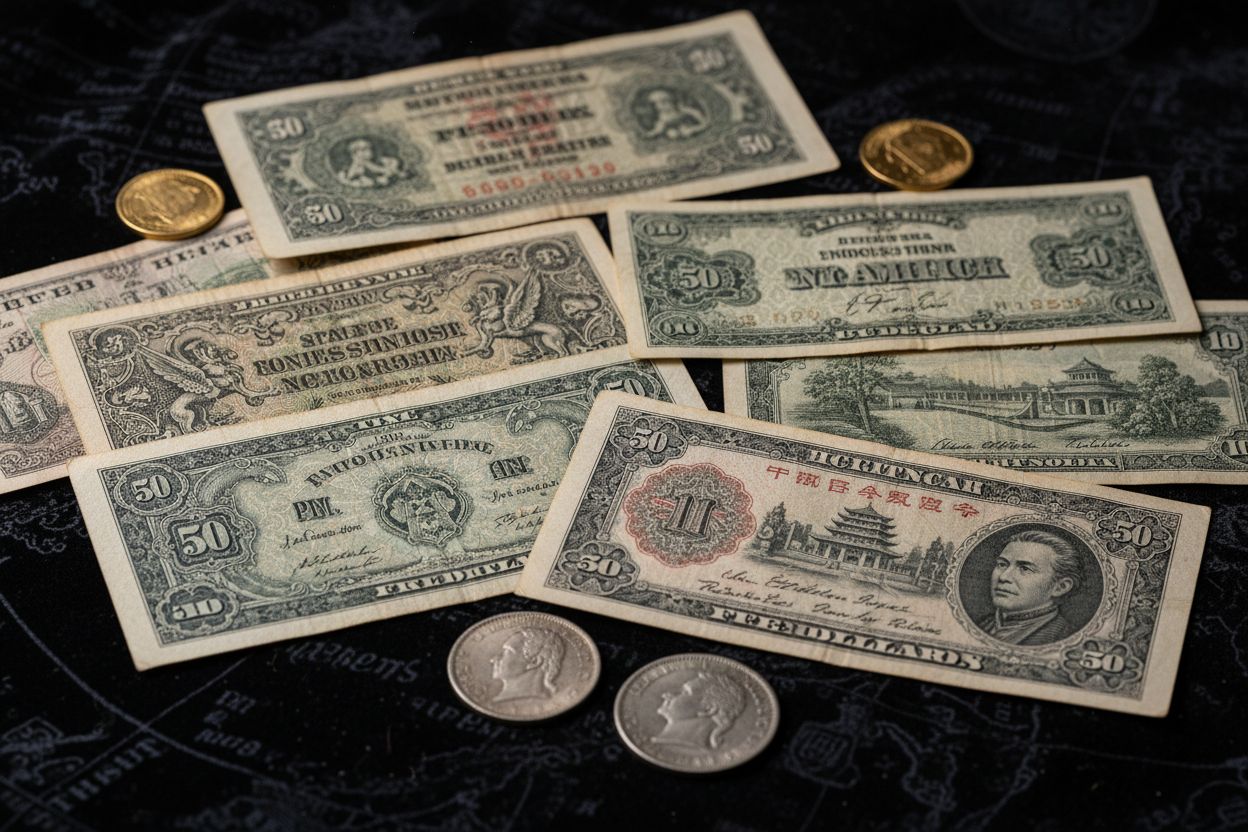
Paper money values are determined by an intricate combination of series, seal color, signature combination, serial number patterns, star notes, and condition. A common bill worth face value might sit next to a star note replacement worth hundreds. Large-size notes predating 1929, Confederate currency, and fractional currency each occupy specialized markets. Error notes, miscuts, inverted overprints, and missing printings, are among the most valuable paper money items. Value Identifier decodes these variables to reveal whether your bills are worth face value or collector premiums.
What your scan returns
Point your camera at your paper money and get a full report in seconds: identification, a market-based price range, condition, rarity and more. Here's an example of the kind of report you'll see.
Paper Money
1935 $1 Silver Certificate
$3 – $12
Condition
Very Fine
Rarity
Common
Year
1935
A circulated blue-seal silver certificate, honest and collectible but common. Star notes, low serials, and crisp uncirculated examples are where paper money value hides.
Fun fact
A serial number like 00000001 can make a $1 bill worth $15,000.
Key factors that determine Paper Money value
Series & Type
Large-size notes, silver certificates, gold certificates, Federal Reserve notes, and national bank notes each have distinct collector markets and value structures.
Denomination & Seal Color
Specific denomination and seal combinations (red seal, blue seal, gold seal, brown seal) indicate the note type and affect collector demand.
Serial Number
Star notes (replacement notes), low serial numbers, fancy serial patterns (solid, ladder, radar), and binary numbers command premiums.
Condition
Paper crispness, centering, margins, and absence of folds, stains, and tears determine the condition grade on the standard banknote scale.
Errors
Printing errors including miscuts, inverted overprints, missing printings, and obstruction errors are among the most valuable paper money items.
Tips for scanning your Paper Money
Photograph both the front and back of the note flat on a dark background, ensuring all text, serial numbers, and seals are clearly visible.
Capture the serial number close-up, as star designation, low numbers, and fancy patterns are critical value indicators.
Use even, shadow-free lighting to accurately show the paper condition and any defects for proper condition assessment.
Handle notes by the edges and photograph without touching the face, as oils from fingers can permanently mark uncirculated notes.
Paper Money market overview
The paper money market supports active collecting across multiple subcategories from colonial currency through modern Federal Reserve notes. Fancy serial numbers have gained particular popularity as an accessible entry point to paper money collecting. Large-size notes and early Federal Reserve issues maintain strong auction performance. The grading and authentication market (PMG, PCGS Currency) has professionalized the category and increased buyer confidence.
Paper Money valuation FAQ
What makes a bill valuable beyond face value?+
Age, series type, seal color, error status, fancy serial numbers, star note designation, and condition all create premiums above face value. Value Identifier checks for all these factors simultaneously.
Are star notes valuable?+
Star notes (replacement notes with a star in the serial number) are worth premiums when they are from low-print-run series. Common star notes may have minimal premiums, while scarce series star notes can be worth significant amounts.
Can Value Identifier detect error notes?+
The AI identifies visible errors including miscuts, misaligned printings, and missing elements. Some errors require physical examination (paper folds, ink errors) for definitive identification.
Does Value Identifier work for foreign currency?+
Yes. The AI recognizes paper money from countries worldwide, identifying denominations, series, and collector value for both current and obsolete currencies.
Ready to identify & value your Paper Money?
Download Value Identifier free and scan your first items, no account needed.