Get an Accurate Baseball Card Valuation
Baseball cards represent over a century of American sports history and collecting tradition. Value Identifier's AI recognizes everything from pre-war tobacco cards to modern Bowman Chrome rookies, delivering identification and market pricing with a single photograph.


Try it free, identify any item
Snap or upload a photo and get its value in seconds
Why knowing your Baseball Cards value matters
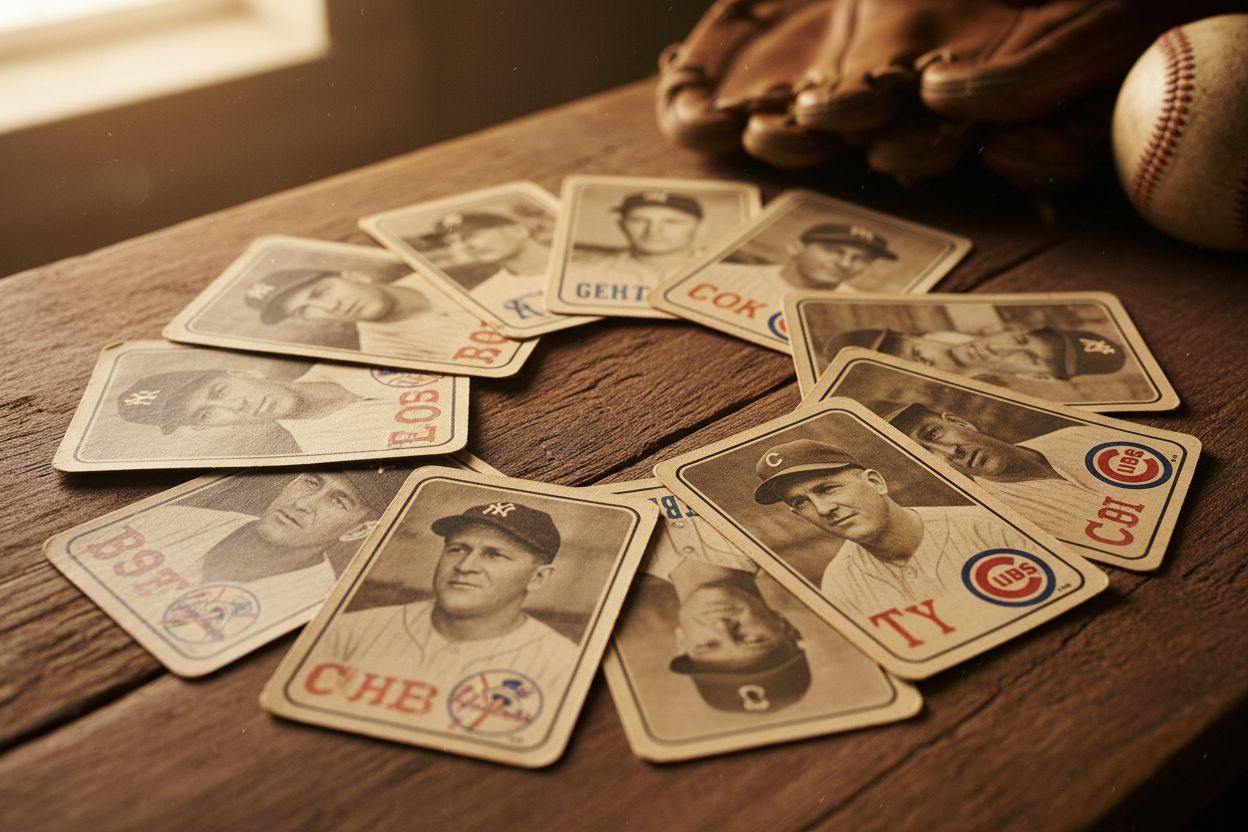
A 1952 Topps Mickey Mantle can fetch millions while a common 1989 Donruss sits in dollar bins. The baseball card market rewards knowledge above all else. Rookie cards, short prints, and error variations create pricing gaps that only informed collectors can navigate. Condition is paramount, with even slight corner wear dropping a card from premium to pedestrian value. Value Identifier arms you with the recognition power to separate treasures from trade bait.
What your scan returns
Point your camera at your baseball cards and get a full report in seconds: identification, a market-based price range, condition, rarity and more. Here's an example of the kind of report you'll see.
Baseball Cards
1989 Upper Deck Ken Griffey Jr. #1 RC
$45 – $90
Condition
Near Mint
Rarity
Iconic Rookie
Year
1989
The most recognizable rookie card of the modern era, with sharp corners and good centering. High-grade PSA 10 copies trade for thousands; raw near-mint copies stay in double digits.
Fun fact
This card launched Upper Deck as a premium brand — it was card #1 in their first set ever.
Key factors that determine Baseball Cards value
Rookie Card Status
A player's recognized rookie card almost always commands the highest premium among their cardboard appearances.
Manufacturer & Year
Topps, Bowman, Fleer, and Upper Deck each carry different collector followings, and certain vintage years are particularly prized.
Parallel & Insert Rarity
Refractors, numbered parallels, and short-print variations can be worth many multiples of the base card.
Player Performance & Legacy
Hall of Famers, MVP winners, and players with cultural significance drive sustained demand across decades.
Surface & Corner Condition
Sharp corners, clean surfaces, and proper centering are essential for high-grade potential and maximum resale value.
Tips for scanning your Baseball Cards
Lay the card on a solid-color surface and shoot straight down to avoid perspective distortion that can hinder text recognition.
Ensure the entire card is in frame including borders, as edge condition is a critical factor in the AI's grading analysis.
Use steady, even lighting without glare spots. Matte surfaces photograph easily, but glossy cards need diffused light.
For thick relic or patch cards, photograph from a slight angle to capture the embedded material for proper variant identification.
Baseball Cards market overview
The baseball card hobby has undergone a renaissance driven by online marketplaces and a new generation of collectors. Vintage pre-1970 cards in high grade remain scarce and continue to appreciate, while modern rookie cards of top prospects see volatile but exciting price action. The grading submission boom has created a two-tier market where raw and graded cards are priced very differently.
Baseball Cards valuation FAQ
Which baseball cards are most valuable?+
Pre-war cards like T206 Honus Wagner, 1952 Topps Mantle, and key rookie cards of Hall of Famers consistently rank among the most valuable. Modern Bowman 1st Chrome autos of top prospects also command strong prices.
Does Value Identifier recognize serial-numbered parallels?+
Yes. The AI detects numbering on card surfaces and identifies the specific parallel tier, such as /25 gold, /50 blue, or 1/1 superfractors.
Are 1990s baseball cards worth anything?+
Most mass-produced cards from 1987-1994 have minimal value due to overproduction. However, specific inserts, refractors, and rookie cards from that era can still be quite valuable. The AI helps identify the exceptions.
How important is centering for baseball card value?+
Centering is one of four major grading criteria. A card with 50/50 centering front and back has the best chance at a gem mint grade, while 60/40 or worse can cap the grade and reduce value significantly.
Ready to identify & value your Baseball Cards?
Download Value Identifier free and scan your first items, no account needed.