Discover the True Value of Your Pokémon Cards
The Pokémon Trading Card Game has created one of the most dynamic collectible markets in history. Value Identifier's AI distinguishes between thousands of printings, editions, and holographic variants to pinpoint exactly what you hold and what it commands on today's market.


Try it free, identify any item
Snap or upload a photo and get its value in seconds
Why knowing your Pokémon Cards value matters
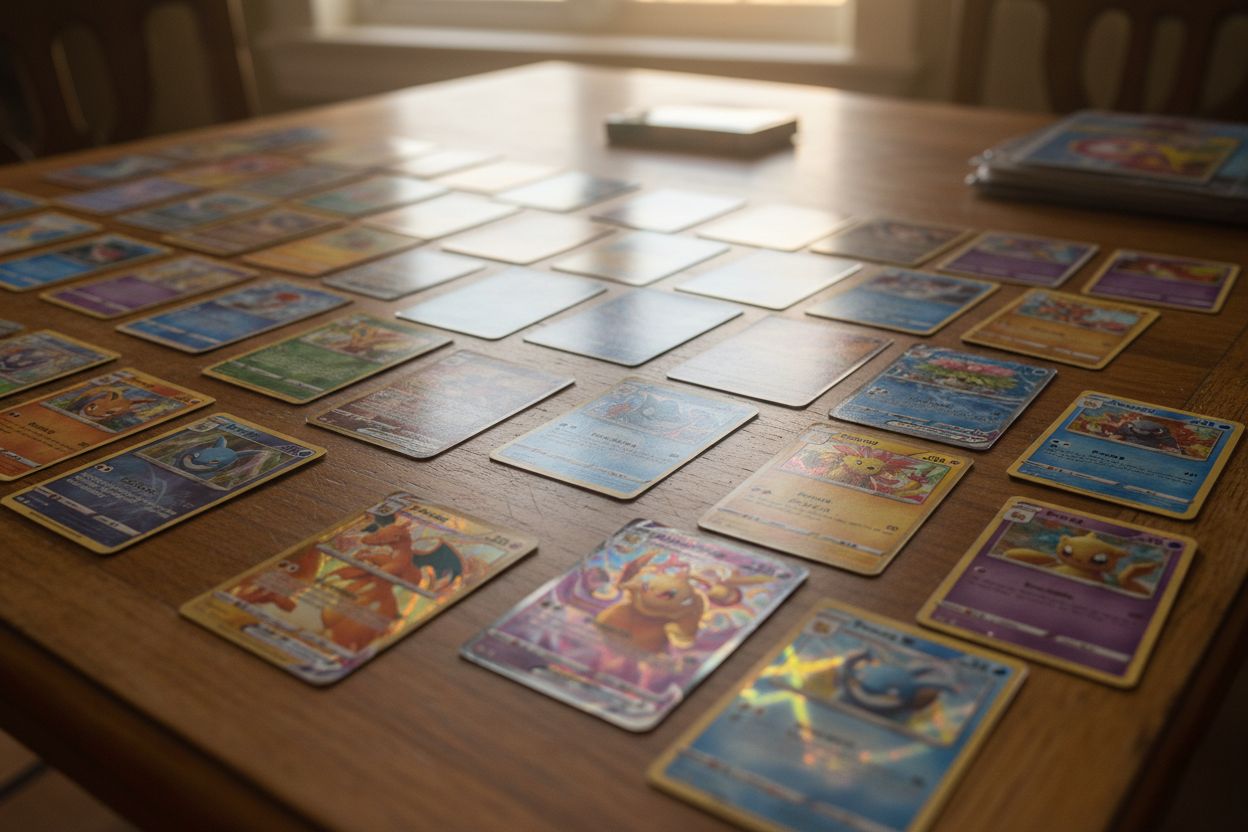
Pokémon cards have exploded from childhood keepsakes into serious investment-grade collectibles, with individual cards selling for six and even seven figures. First Edition Base Set holographics, gold star variants, and sealed product have become alternative asset classes. Knowing whether your card is a shadowless print or an unlimited run can mean the difference between a few dollars and a small fortune. Value Identifier's AI decodes these subtle distinctions instantly.
What your scan returns
Point your camera at your pokémon cards and get a full report in seconds: identification, a market-based price range, condition, rarity and more. Here's an example of the kind of report you'll see.
Pokémon Cards
Charizard Holo, Base Set Unlimited
$180 – $320
Condition
Lightly Played
Rarity
Holo Rare
Year
1999
An unlimited-print Base Set Charizard with minor edge whitening and a clean holo surface. Graded copies of this card in PSA 8 or better sell for several times the raw price.
Fun fact
Charizard's 120 HP made it the most powerful card in the original Base Set.
Key factors that determine Pokémon Cards value
Edition & Print Run
First Edition stamps, shadowless prints, and limited promotional releases carry dramatically higher premiums than unlimited printings.
Holographic Type
Standard holos, reverse holos, full arts, secret rares, and alt arts each occupy different pricing brackets in the market.
Centering & Condition
Card condition following PSA/BGS standards, corners, edges, surface, centering, determines grade potential and resale value.
Set & Era
Vintage WOTC-era cards generally command higher prices than modern sets, though chase cards from recent expansions can spike.
Character Popularity
Charizard, Pikachu, and other fan-favorite Pokémon consistently drive higher demand regardless of set or era.
Tips for scanning your Pokémon Cards
Photograph the card flat on a contrasting background, ensuring all four corners and the full card face are visible for accurate edition detection.
Avoid using flash, instead use diffused overhead lighting so the AI can properly read holographic patterns and surface condition.
If the card is sleeved, remove it from the sleeve to prevent glare artifacts that can interfere with text and symbol recognition.
Capture the back of the card as well, since back condition and coloring help distinguish print runs and detect fakes.
Pokémon Cards market overview
The Pokémon card market experienced a massive surge starting in 2020 and has since stabilized at levels well above pre-boom prices. Graded gem mint copies of vintage holographics remain blue-chip collectibles with strong auction performance. Modern alt-art cards from Evolving Skies and similar sets have carved out their own enthusiastic collector base, maintaining healthy secondary market activity.
Pokémon Cards valuation FAQ
Can Value Identifier tell if my Pokémon card is First Edition?+
Yes. The AI specifically looks for the First Edition stamp on the left side of the card, as well as shadowless border characteristics that distinguish early print runs.
Does it recognize Japanese Pokémon cards?+
Absolutely. Value Identifier supports Japanese, Korean, and other international Pokémon TCG printings, including exclusive promos only released in specific regions.
How does grading affect Pokémon card value?+
Dramatically. A PSA 10 gem mint card can be worth 5x to 50x more than the same card in raw, ungraded near-mint condition, especially for vintage releases.
Can it identify fake Pokémon cards?+
Value Identifier's AI analyzes print quality, font consistency, coloring, and texture patterns to flag cards that show indicators of being counterfeit reproductions.
Ready to identify & value your Pokémon Cards?
Download Value Identifier free and scan your first items, no account needed.