Discover the True Value of Your Yu-Gi-Oh! Cards
The Yu-Gi-Oh! Trading Card Game maintains one of the largest and most active player and collector communities globally. Value Identifier's AI identifies card editions, set codes, rarity indicators, and regional variants to deliver accurate pricing across the vast Yu-Gi-Oh! card catalog.


Try it free, identify any item
Snap or upload a photo and get its value in seconds
Why knowing your Yu-Gi-Oh! Cards value matters
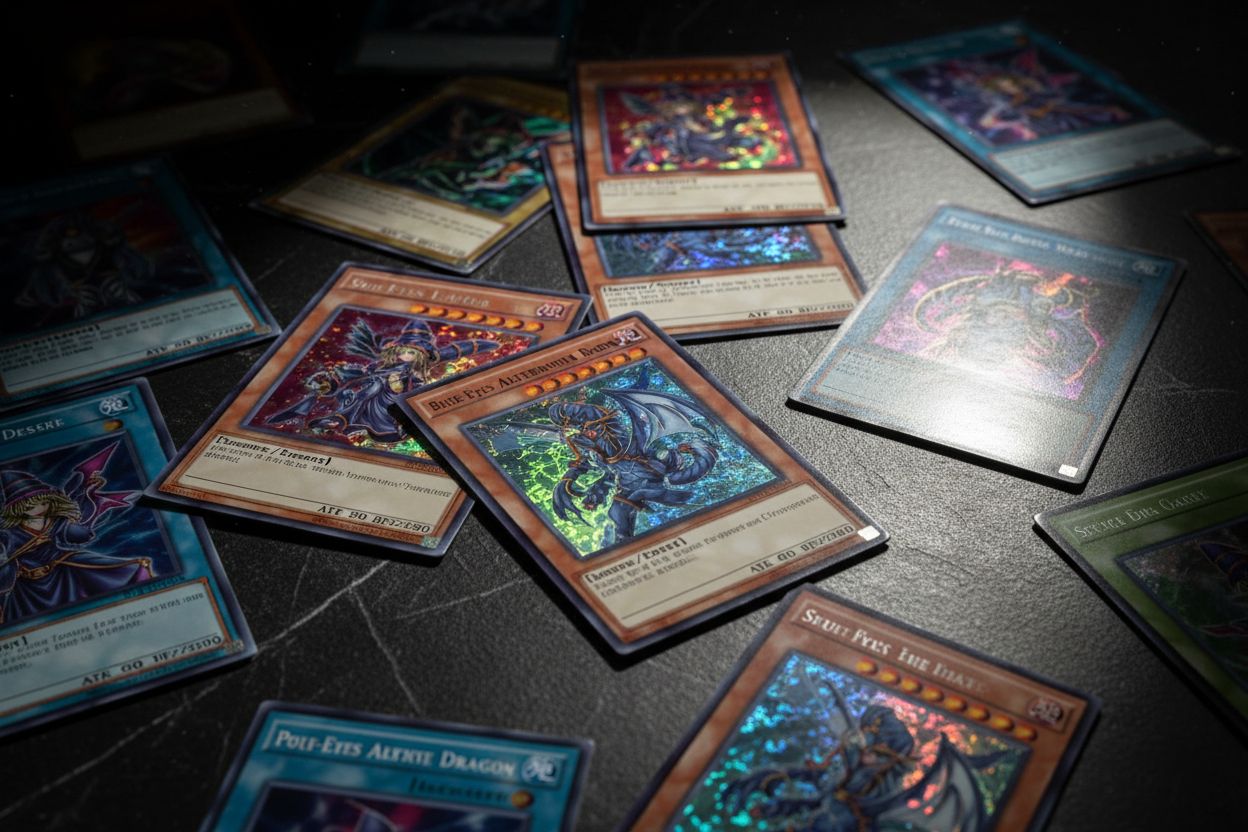
Yu-Gi-Oh! cards occupy a unique position where competitive play demand and collector interest create dual pricing pressures. A tournament-staple card can spike in value overnight after a format change, while vintage first-edition secret rares maintain steady collector premiums. The difference between a 1st Edition and an Unlimited printing, or between a ghost rare and an ultra rare, represents significant value gaps. Value Identifier's AI recognizes these distinctions to give you accurate, current market pricing.
What your scan returns
Point your camera at your yu-gi-oh! cards and get a full report in seconds: identification, a market-based price range, condition, rarity and more. Here's an example of the kind of report you'll see.
Yu-Gi-Oh! Cards
Blue-Eyes White Dragon, LOB 1st Edition
$350 – $700
Condition
Lightly Played
Rarity
Ultra Rare
Year
2002
The chase card from Legend of Blue Eyes, the set that launched the English game. First-edition stamps multiply value several times over unlimited prints.
Fun fact
Legend of Blue Eyes was the first Yu-Gi-Oh! set released outside Japan.
Key factors that determine Yu-Gi-Oh! Cards value
Edition & Printing
1st Edition cards carry premiums over Unlimited prints, and original print runs outvalue reprints from later sets.
Rarity Level
Common, rare, super rare, ultra rare, secret rare, ghost rare, and starlight rare designations follow a clear value hierarchy.
Competitive Demand
Cards currently used in competitive decks can see dramatic price increases driven by tournament play and format changes.
Set & Release
Certain legacy sets (Legend of Blue Eyes, Metal Raiders) and special releases carry inherent collector premiums.
Condition
Near-mint cards trade at full market value, while played conditions with edge wear, scratches, or bends trade at discounts.
Tips for scanning your Yu-Gi-Oh! Cards
Photograph the card face showing the set code in the lower right, as this alphanumeric code is the fastest way for the AI to identify the exact printing.
Ensure the edition indicator (1st Edition text or lack thereof) near the card art is clearly visible, as this significantly affects valuation.
Capture the rarity symbol on the right side of the card clearly. The color and style of this symbol determine the rarity tier.
Use even, diffused lighting to prevent glare on secret rare and ghost rare cards, whose reflective surfaces can obscure details.
Yu-Gi-Oh! Cards market overview
The Yu-Gi-Oh! market is uniquely influenced by competitive play, with banlist changes and new set releases creating rapid price shifts for tournament-relevant cards. Ghost rares and starlight rares have emerged as premier collector targets with strong price appreciation. The vintage first-edition market for early sets remains robust, with pristine copies of iconic cards like Blue-Eyes White Dragon achieving strong auction results.
Yu-Gi-Oh! Cards valuation FAQ
Can Value Identifier tell the difference between rarities?+
Yes. The AI reads the rarity symbol (common, rare, super, ultra, secret, ghost, starlight) and cross-references the set code to precisely identify the card's rarity tier and corresponding market value.
Do Yu-Gi-Oh! card prices change frequently?+
Yes, more than most collectible card games. Banlist updates, new set releases, and competitive meta shifts can cause significant price swings within days. Value Identifier uses current market data for timely estimates.
Are old Yu-Gi-Oh! cards valuable?+
Many early Yu-Gi-Oh! cards are quite valuable, especially 1st Edition copies from the original Legend of Blue Eyes White Dragon, Metal Raiders, and similar early sets. The AI identifies these vintage printings automatically.
Does it recognize international Yu-Gi-Oh! cards?+
Value Identifier supports English, Japanese, Korean, and European-language Yu-Gi-Oh! cards, identifying regional printings and their specific market values.
Ready to identify & value your Yu-Gi-Oh! Cards?
Download Value Identifier free and scan your first items, no account needed.