Identify & Value Your Sports Cards Instantly
Sports cards encompass every major professional league and span over a century of production history. Value Identifier's AI recognizes cards from baseball, basketball, football, hockey, soccer, and more, identifying specific players, sets, parallels, and condition to deliver comprehensive market pricing.


Try it free, identify any item
Snap or upload a photo and get its value in seconds
Why knowing your Sports Cards value matters
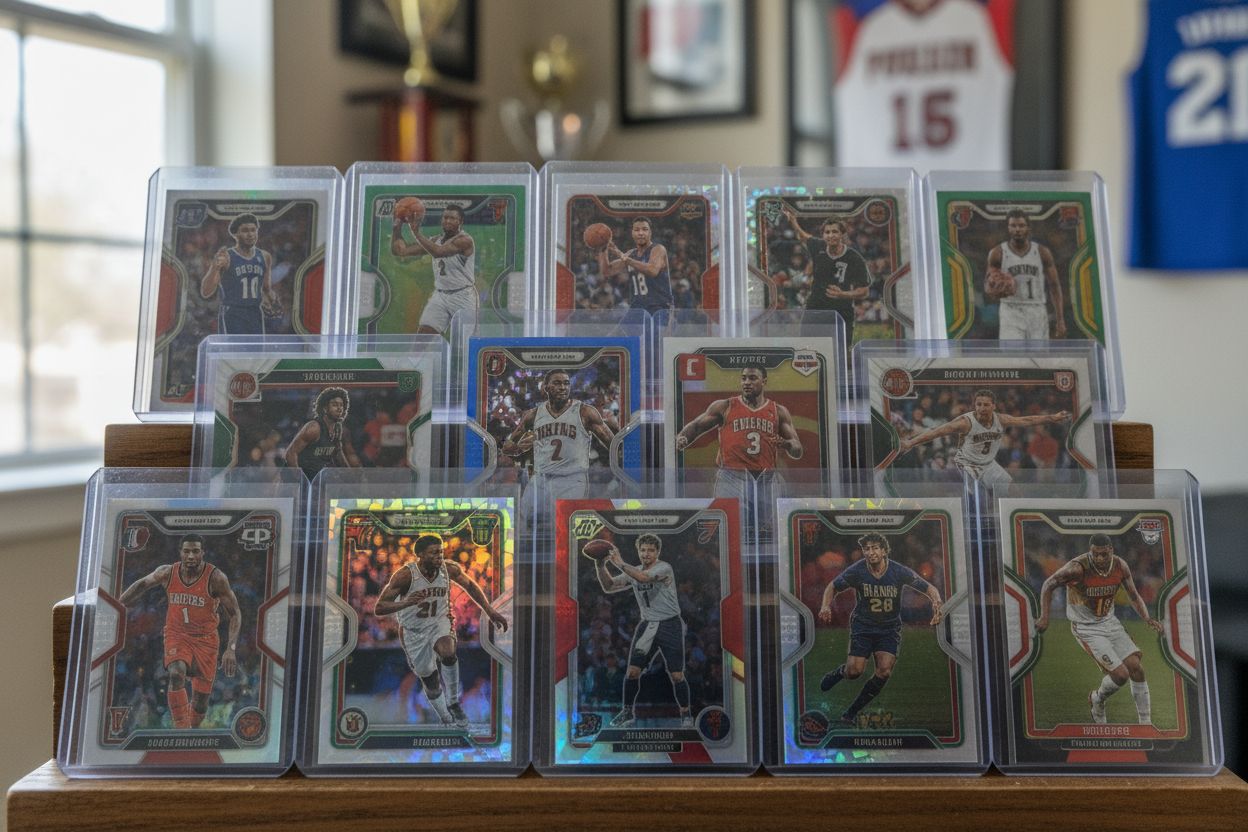
The sports card market is the largest segment of the collectible card industry, with individual cards selling for millions at auction. Rookie cards, autographs, and low-numbered parallels drive the premium market, while player performance and career milestones create real-time price movements. Grading has become standard for high-value cards, with PSA 10 and BGS 9.5 copies trading at exponential premiums. Value Identifier provides the identification and pricing foundation every sports card collector needs.
What your scan returns
Point your camera at your sports cards and get a full report in seconds: identification, a market-based price range, condition, rarity and more. Here's an example of the kind of report you'll see.
Sports Cards
2018 Panini Prizm Luka Dončić RC
$80 – $150
Condition
Raw, NM
Rarity
Key Rookie
Year
2018
The definitive Luka rookie in clean raw condition. Base Prizm rookies of superstar players remain the most liquid modern cards, with graded gems trading daily.
Fun fact
Prizm became basketball's flagship set after Panini took the NBA license in 2009.
Key factors that determine Sports Cards value
Player & Rookie Status
Rookie cards of star players are the cornerstone of sports card collecting, with first-year cards commanding the highest premiums.
Set & Product Tier
Premium products (National Treasures, Flawless, Immaculate) command higher base values than retail-level products (Donruss, Score).
Parallel & Numbering
Cards numbered to smaller quantities (/25, /10, /5, 1/1) trade at proportionally higher prices due to verified scarcity.
Autograph & Memorabilia
On-card autographs, patch cards, and logoman cards represent the premium tier of modern sports card releases.
Condition & Grade
Professional grades (PSA, BGS, SGC) establish definitive condition assessments that directly determine market pricing tiers.
Tips for scanning your Sports Cards
Photograph the card face straight-on with even lighting, ensuring the player name, team, and card number are clearly readable.
Include the card back if it shows serial numbering, autograph certification, or unique identifiers that affect the specific card's value.
For graded cards, photograph the entire slab including the label, as the grade, serial number, and population report data inform pricing.
Avoid glare on chrome, prizm, and refractor surfaces by using diffused overhead lighting or photographing at a slight angle.
Sports Cards market overview
The sports card market has transformed from a hobbyist pursuit into an asset class tracked by financial analysts. Basketball cards have shown the most dramatic appreciation driven by global NBA popularity. The graded card market provides price transparency, while the raw card market offers value opportunities for collectors who can identify under-graded examples.
Sports Cards valuation FAQ
What sport has the most valuable cards?+
Baseball holds the record for the most expensive individual card sales (vintage Honus Wagner, Mickey Mantle), but basketball cards have shown the strongest recent appreciation, particularly for modern stars.
Does Value Identifier work for all sports?+
Yes. The AI covers all major sports including baseball, basketball, football, hockey, soccer, golf, boxing, UFC, and motorsports cards from both US and international manufacturers.
How much does grading matter for sports cards?+
For valuable cards, grading is essential. A PSA 10 can be worth 5-20x or more than a PSA 8 of the same card. Even for mid-value cards, grading provides authentication and condition verification that improves resale confidence.
Are modern sports cards a good investment?+
Select modern cards, particularly low-numbered rookies of elite players, have shown strong appreciation. However, the market is volatile and highly dependent on player performance. Value Identifier helps track current market values to inform your decisions.
Ready to identify & value your Sports Cards?
Download Value Identifier free and scan your first items, no account needed.