Identify & Value Your Trading Cards Instantly
The trading card universe extends far beyond any single game or sport, encompassing thousands of brands, games, and collectible series. Value Identifier's AI handles them all, from niche European sets to mainstream American sports and gaming franchises, providing fast, reliable identification and pricing.


Try it free, identify any item
Snap or upload a photo and get its value in seconds
Why knowing your Trading Cards value matters
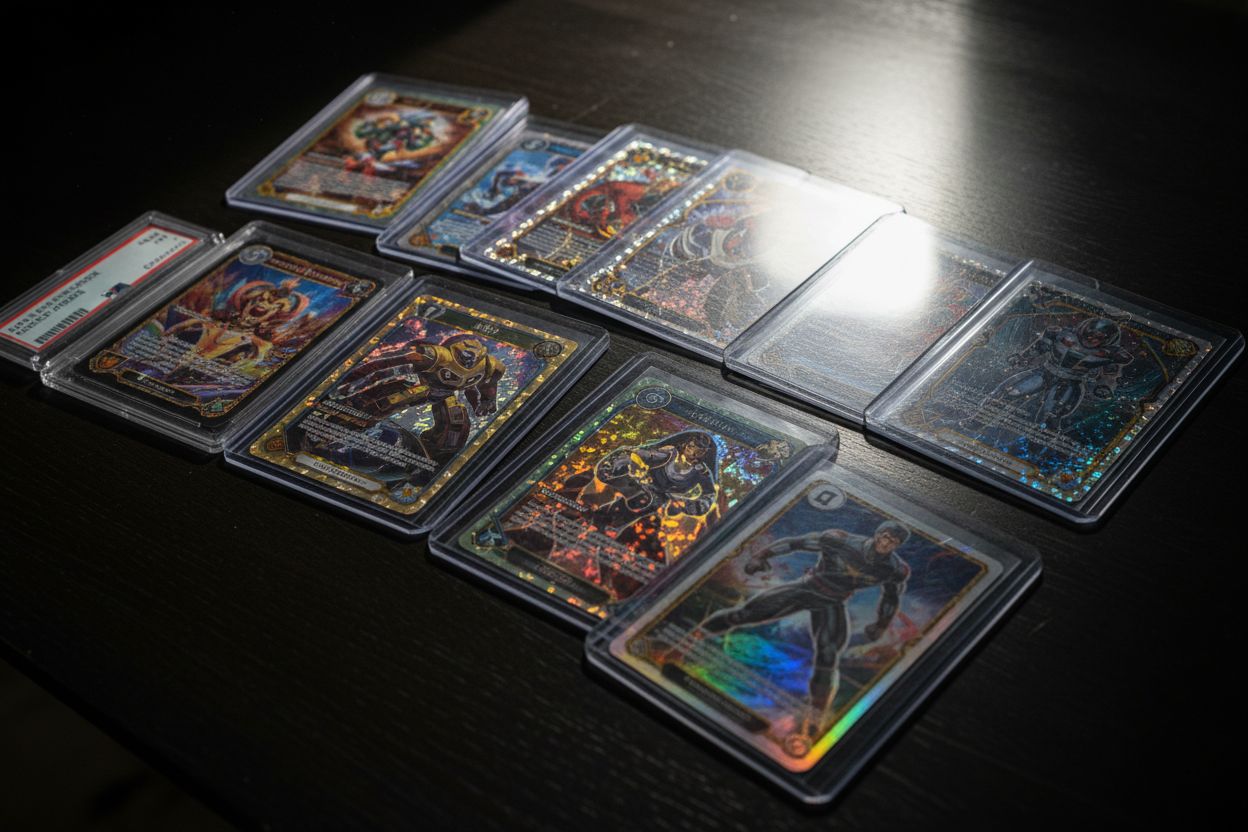
Trading cards span an enormous spectrum of genres, eras, and collectibility levels, making it nearly impossible to know every card's value by memory alone. A promotional card from an obscure set might be worth hundreds, while a flashy-looking common is worth pennies. Cross-category expertise is rare among human appraisers, but Value Identifier's AI draws from comprehensive databases covering sports, gaming, entertainment, and non-sport card markets simultaneously.
What your scan returns
Point your camera at your trading cards and get a full report in seconds: identification, a market-based price range, condition, rarity and more. Here's an example of the kind of report you'll see.
Trading Cards
1996 Topps Kobe Bryant #138 RC
$60 – $120
Condition
Near Mint
Rarity
Key Rookie
Year
1996
A mainstream Kobe rookie from the 1996 Topps set with clean surfaces and minor corner touch. One of the most traded basketball cards of the late 90s boom.
Fun fact
The 1996 draft class is considered one of the deepest in NBA history.
Key factors that determine Trading Cards value
Game or Brand
Cards from established franchises like sports leagues, Pokémon, or Magic carry deeper markets than smaller or discontinued brands.
Rarity Tier
Common, uncommon, rare, ultra-rare, and secret-rare designations directly correlate with supply scarcity and collector interest.
Condition & Grade
Near-mint and gem-mint cards trade at significant premiums over played or damaged copies across every trading card category.
Autograph & Memorabilia Inserts
Cards featuring genuine player signatures or embedded jersey swatches occupy premium tiers in most product lines.
Tips for scanning your Trading Cards
Center the card in your camera frame with a small margin around all edges so the AI can assess border condition and centering.
Photograph in a well-lit area using ambient light rather than direct flash to preserve color accuracy for set identification.
If the card has a textured or patterned surface, hold the camera steady and let autofocus lock before capturing to maintain sharpness.
Remove cards from top loaders or magnetic cases before scanning if the holder creates visible reflections or distortions.
Trading Cards market overview
The broader trading card market has matured into a multi-billion-dollar industry with institutional investor interest. Digital platforms have made price discovery transparent and accessible, benefiting sellers and buyers alike. Seasonal cycles tied to product releases and sporting events create predictable demand patterns that savvy collectors leverage.
Trading Cards valuation FAQ
What types of trading cards can Value Identifier recognize?+
The AI covers sports cards (baseball, basketball, football, soccer, hockey), TCGs (Pokémon, Magic, Yu-Gi-Oh!, etc.), entertainment cards, and non-sport collectible sets from hundreds of manufacturers.
Can it identify a card's specific set and year?+
Yes. Value Identifier cross-references design elements, logos, card numbers, and visual patterns to pinpoint the exact set, year, and variant of each card.
Is there a difference in value between raw and graded cards?+
Generally, yes. Graded cards in high grades (PSA 9-10, BGS 9.5-10) command premiums because the grade is authenticated and the card is protected. Raw cards are priced assuming average condition unless professionally assessed.
How do I know if my card is a short print?+
Value Identifier flags short prints, super short prints, and variation cards automatically. These are identified by subtle design differences, print codes, or photo variations that the AI has been trained to detect.
Ready to identify & value your Trading Cards?
Download Value Identifier free and scan your first items, no account needed.