What Are Your Gaming Consoles Really Worth?
Gaming consoles have a dual market. Current-generation systems trade based on retailer pricing and demand, while retro consoles have developed a thriving collector market. Value Identifier's AI identifies console models, revisions, limited editions, and included accessories to deliver pricing across both contemporary and vintage gaming hardware.


Try it free, identify any item
Snap or upload a photo and get its value in seconds
Why knowing your Gaming Consoles value matters
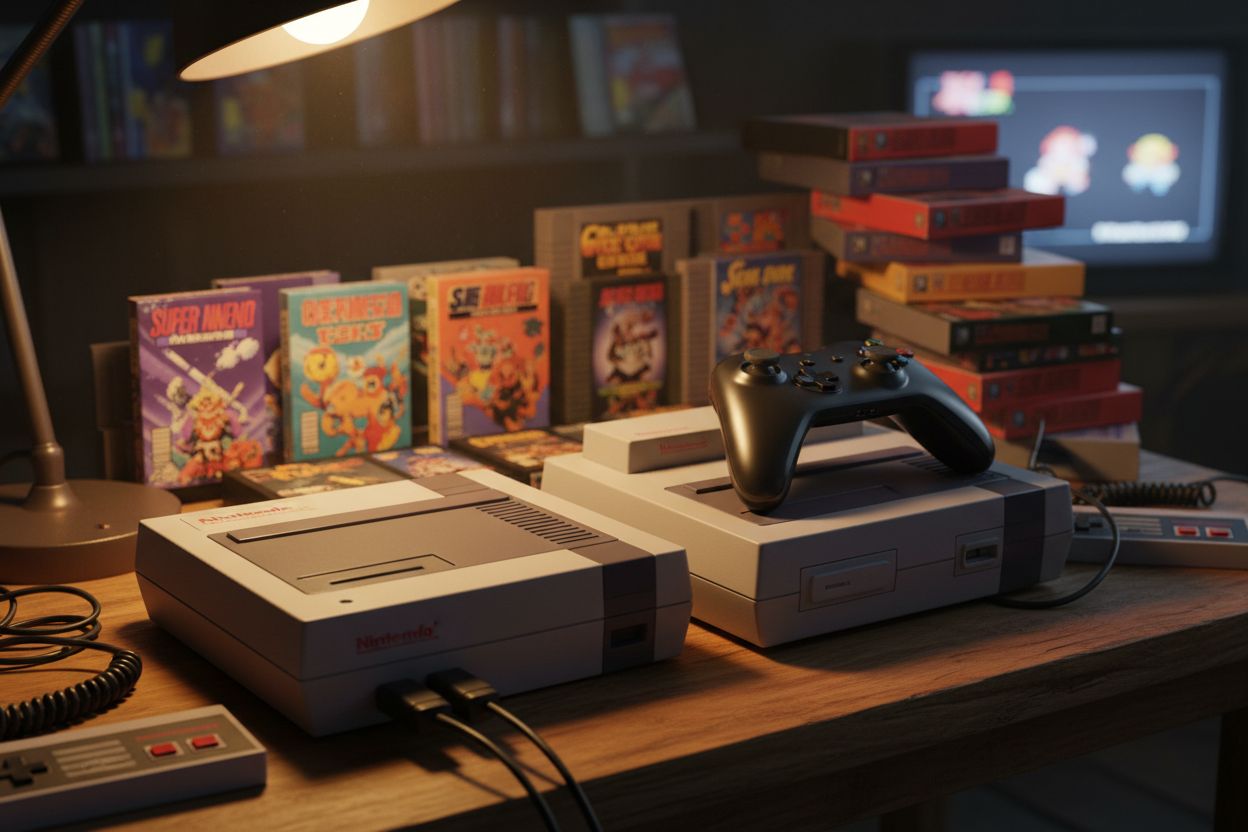
Console values depend heavily on generation, edition, and completeness. A standard PlayStation 5 has a predictable resale range, but a limited-edition color variant can be worth considerably more. Retro consoles, particularly those from Nintendo, Sega, and early Sony, have developed strong collector markets where complete-in-box examples command premiums that dwarf their original retail prices. Accessories, controllers, and original packaging all contribute to the total package value. Value Identifier accounts for all these factors.
What your scan returns
Point your camera at your gaming consoles and get a full report in seconds: identification, a market-based price range, condition, rarity and more. Here's an example of the kind of report you'll see.
Gaming Consoles
Nintendo GameCube, Indigo, Complete
$90 – $140
Condition
Working
Rarity
Retro Favorite
Year
2001
A tested console with OEM controller, cables, and memory card. GameCube prices have climbed steadily as its game library became one of the most collected of the 2000s.
Fun fact
The GameCube's handle made it the most portable home console Nintendo ever built.
Key factors that determine Gaming Consoles value
Console & Generation
The specific console model and generation, from NES through PlayStation 5, establishes the base market category.
Limited Editions
Special-edition consoles with unique colors, designs, or branding (game-themed editions, anniversary models) carry collector premiums.
Completeness
Console, all cables, controllers, manuals, and original box together constitute a complete set that commands maximum value.
Condition & Functionality
Full working condition, clean cosmetic appearance, and functional disc drives and ports are essential for full pricing.
Modification Status
Certain modifications (region-free, HDMI mods on retro consoles) can add value for some buyers, while others prefer unmodified originals.
Tips for scanning your Gaming Consoles
Photograph the console from front and top, clearly showing the model name, any special-edition branding or artwork, and overall cosmetic condition.
Include all controllers, cables, and accessories in a single group photo to demonstrate completeness.
Capture the model and serial number label (usually on the bottom or back) for precise hardware revision identification.
For retro consoles, photograph the box separately if available, showing front, back, and condition. The box alone can represent significant value.
Gaming Consoles market overview
Retro gaming console prices have stabilized after the pandemic-era surge, settling at levels that still represent meaningful appreciation over their original retail prices. Nintendo consoles consistently command the strongest retro premiums. Current-generation consoles maintain resale values near retail when supply is constrained, then gradually depreciate as availability improves.
Gaming Consoles valuation FAQ
Which retro consoles are most valuable?+
Nintendo 64, Super Nintendo, Sega Saturn, and Neo Geo consoles in complete-in-box condition consistently rank among the most valuable. Limited-edition variants and region-exclusive models add further premiums.
Does having the original box matter?+
Significantly. A complete-in-box retro console can be worth 2-5x more than a loose console with cables. For current-generation systems, the box adds modest value but is less critical.
Can Value Identifier identify console hardware revisions?+
Yes. The AI recognizes different hardware revisions (launch models vs. slims vs. redesigns) and model numbers that distinguish between versions with different features, reliability, and values.
Are modified consoles worth more or less?+
It depends on the modification. Quality HDMI and RGB mods on retro consoles can increase value for gaming-focused buyers. Modchips for playing copied games may decrease value for collectors. Value Identifier notes when modifications are detected.
Ready to identify & value your Gaming Consoles?
Download Value Identifier free and scan your first items, no account needed.