What Are Your Guitars Really Worth?
Guitars are simultaneously musical tools and collectible artifacts, with vintage instruments from iconic brands commanding astonishing prices. Value Identifier's AI identifies makes, models, years, and specifications from photographs, referencing current dealer and auction markets to price your instrument accurately.


Try it free, identify any item
Snap or upload a photo and get its value in seconds
Why knowing your Guitars value matters
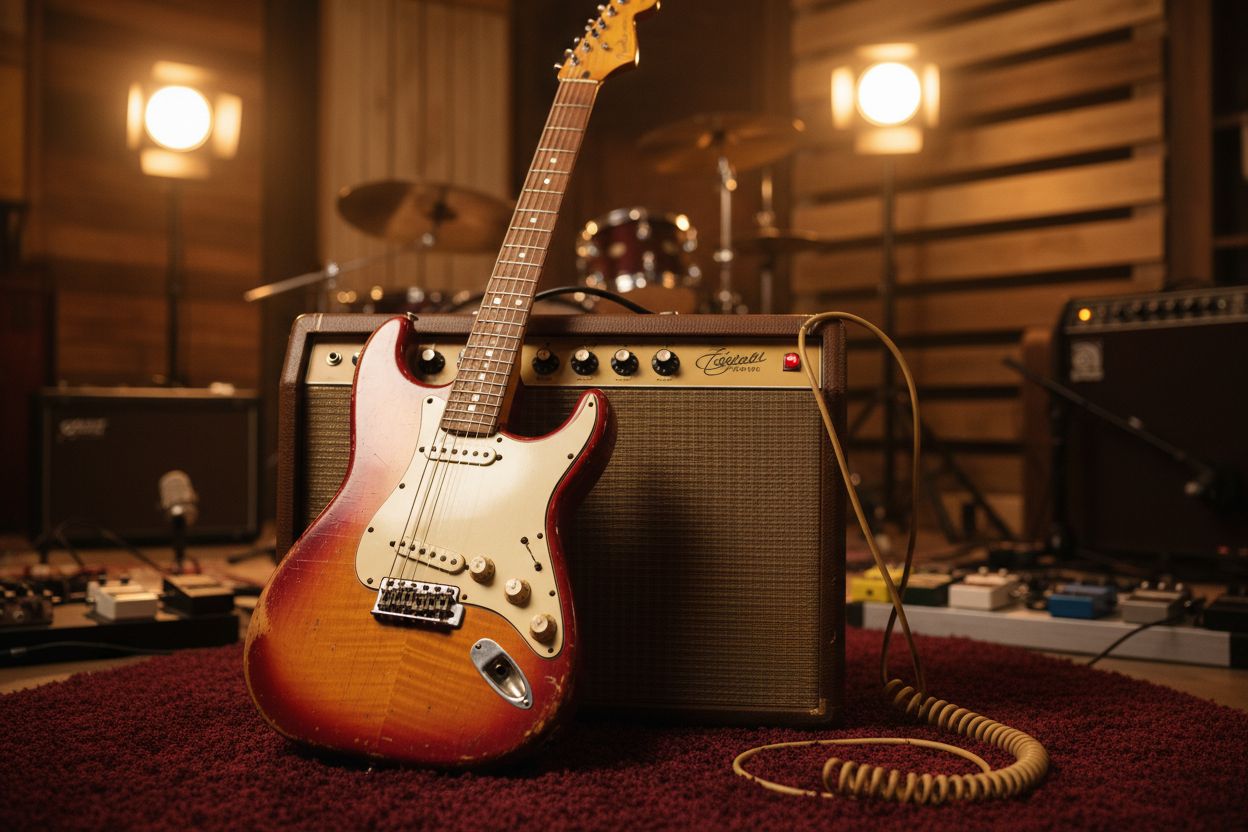
A pre-CBS Fender Stratocaster or a 1959 Gibson Les Paul Standard represents the pinnacle of guitar collecting, with prices in the hundreds of thousands. But even mid-range vintage guitars and modern limited editions can be worth far more than their owners realize. Serial number dating, pickup configurations, hardware originality, and finish authenticity all factor into precise valuation. Value Identifier cuts through the complexity to reveal your guitar's true market position.
What your scan returns
Point your camera at your guitars and get a full report in seconds: identification, a market-based price range, condition, rarity and more. Here's an example of the kind of report you'll see.
Guitars
Fender American Stratocaster
$900 – $1,250
Condition
Excellent
Rarity
Player Grade
Year
2016
A US-made Strat with original pickups, minor pick wear, and the hardshell case. American Fenders hold value far better than the Mexican-made line, typically reselling at 70% of new.
Fun fact
The Stratocaster's contoured body was designed after players complained the Telecaster dug into their ribs.
Key factors that determine Guitars value
Brand, Model & Year
Fender, Gibson, Martin, and PRS are the dominant brands, with specific model years representing peaks of desirability and craftsmanship.
Originality
All-original instruments with factory pickups, tuners, bridges, and finishes are worth significantly more than those with replacement parts.
Condition & Playability
Finish checking, fret wear, neck straightness, and electronic functionality all contribute to the overall condition grade.
Finish & Color
Certain custom colors and limited finishes are rarer and more collectible than standard options from the same production year.
Provenance & Celebrity Ownership
Guitars with documented histories or celebrity connections can command multiples of their standard market value.
Tips for scanning your Guitars
Photograph the full guitar front and back, then capture the headstock close-up showing the logo, serial number, and tuner style.
Include shots of the pickups, bridge, and controls, as hardware configuration is essential for accurate model and year identification.
Capture the neck joint area and any labels inside the sound hole (for acoustics) or in pickup cavities for additional identification data.
Photograph the guitar in natural light to accurately represent finish color and condition. Flash can obscure checking patterns and wear.
Guitars market overview
The vintage guitar market remains robust for premium instruments from the 1950s-1960s golden era, though prices have stabilized from their peaks. Modern boutique and limited-edition guitars have developed their own collector following with active secondary markets. Acoustic guitars from Martin and Gibson maintain steady demand, while electric guitar values are more influenced by specific model and year combinations.
Guitars valuation FAQ
How does Value Identifier date a guitar?+
The AI cross-references serial number formats, headstock designs, logo styles, hardware types, and construction details against known production timelines to estimate the year of manufacture.
Does refinishing affect guitar value?+
Yes, substantially. A refinished vintage guitar typically loses 40-60% of the value of an original-finish example. The AI looks for signs of refinishing such as overspray patterns and inconsistent wear.
Are vintage guitars always more valuable?+
Not always. While golden-era instruments command the highest prices, many vintage guitars from less desirable periods or brands are worth less than quality modern instruments. The AI evaluates each guitar on its specific merits.
Can the AI identify custom shop guitars?+
Yes. Value Identifier recognizes custom shop features, special order specifications, and limited-run models from major manufacturers, pricing them according to their distinct market segment.
More music gear and records
Ready to identify & value your Guitars?
Download Value Identifier free and scan your first items, no account needed.