What Are Your Swords Really Worth?
Swords represent centuries of martial history and craftsmanship, from Japanese katanas to European broadswords and military officers' sabers. Value Identifier's AI analyzes blade styles, furniture types, markings, and construction to identify and price swords across all origins and periods.


Try it free, identify any item
Snap or upload a photo and get its value in seconds
Why knowing your Swords value matters
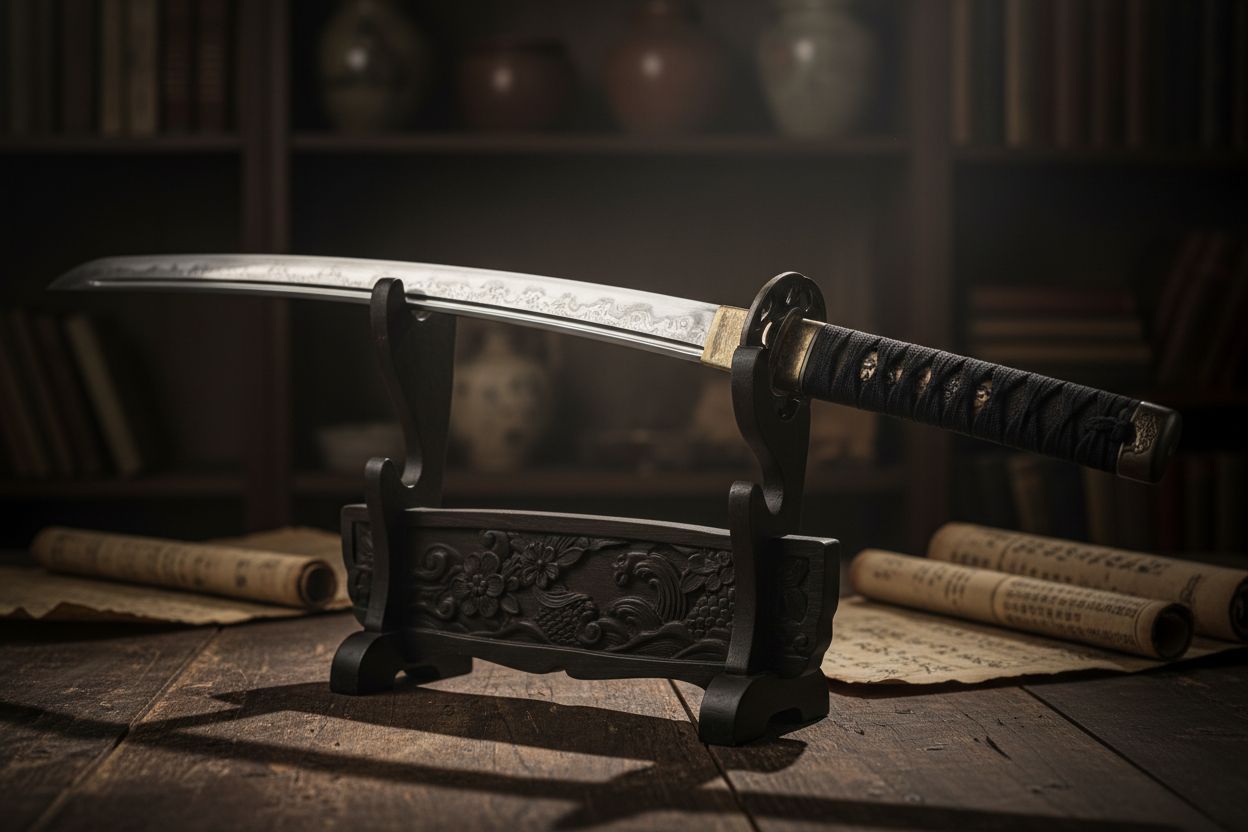
The sword market ranges from inexpensive decorative replicas to museum-quality antiques worth tens of thousands. Distinguishing a genuine antique Japanese katana from a modern reproduction requires expertise in blade geometry, hamon patterns, and signature interpretation. Military swords carry historical significance that varies by conflict, rank, and maker. Value Identifier helps you understand whether your sword is a mass-produced wall hanger or a genuine piece of martial history with real collector value.
What your scan returns
Point your camera at your swords and get a full report in seconds: identification, a market-based price range, condition, rarity and more. Here's an example of the kind of report you'll see.
Swords
WWII Japanese NCO Shin-Guntō
$400 – $800
Condition
Original
Rarity
Wartime Issue
Year
c. 1940
A machine-made NCO sword with matching serial numbers on blade and scabbard. Matching numbers and untouched patina matter more to collectors than shine.
Fun fact
Matching serial numbers can double a military sword's value.
Key factors that determine Swords value
Origin & Period
Genuine antique swords from Japan, Europe, and other regions carry significant premiums over modern reproductions from any origin.
Maker & Signature
Signed blades from recognized swordsmiths (particularly Japanese nihonto) command premiums tied to the maker's reputation and era.
Blade Quality
Steel quality, tempering patterns, edge geometry, and overall craftsmanship indicate the blade's martial and artistic merit.
Furniture & Fittings
Guard, grip, pommel, and scabbard quality, originality, and decorative elements contribute significantly to overall value.
Condition & Preservation
Active rust, pitting, blade reshaping, and replacement parts reduce value, while well-preserved original surfaces maintain it.
Tips for scanning your Swords
Photograph the entire sword unsheathed, showing the full blade length, guard, grip, and pommel in even lighting.
Capture any blade markings, etchings, or signatures close-up. For Japanese swords, the tang (nakago) inscriptions are critical.
Include the scabbard or sheath separately, as original scabbards add value and their construction helps date the piece.
Use angled lighting on the blade to reveal temper lines, fullers, and surface condition that flat lighting may not capture.
Swords market overview
Japanese nihonto (traditional swords) maintain the most structured and active collector market, with established grading and certification through organizations like NBTHK. European swords and military sabers have a strong but more fragmented market. The popularity of historical martial arts has increased demand for quality reproduction swords while also raising awareness of genuine antiques.
Swords valuation FAQ
How can I tell if my sword is a genuine antique?+
Value Identifier analyzes blade construction, furniture style, wear patterns, and marking consistency to assess authenticity. Genuine antiques show specific construction methods, patina patterns, and material characteristics that reproductions typically lack.
Does Value Identifier cover Japanese swords?+
Yes. The AI recognizes katana, wakizashi, tanto, and other Japanese blade types, analyzing hamon patterns, nakago conditions, and mei (signatures) to provide informed valuations.
Are decorative swords worth anything?+
Most modern decorative or wall-hanger swords have minimal resale value regardless of appearance. Value Identifier distinguishes between functional/collectible blades and mass-produced decorative pieces.
What military swords are most valuable?+
Civil War-era officer's swords, Revolutionary War blades, rare WWI and WWII presentation swords, and swords with documented provenance to notable figures command the strongest prices in the military sword market.
More militaria and blades
Ready to identify & value your Swords?
Download Value Identifier free and scan your first items, no account needed.