What Are Your Stamps Really Worth?
Philately remains one of the world's most popular collecting hobbies, with rare stamps achieving auction prices that rival fine art. Value Identifier's AI identifies countries of origin, catalog numbers, perforation gauges, and watermark types to deliver precise valuations from a simple photograph.


Try it free, identify any item
Snap or upload a photo and get its value in seconds
Why knowing your Stamps value matters
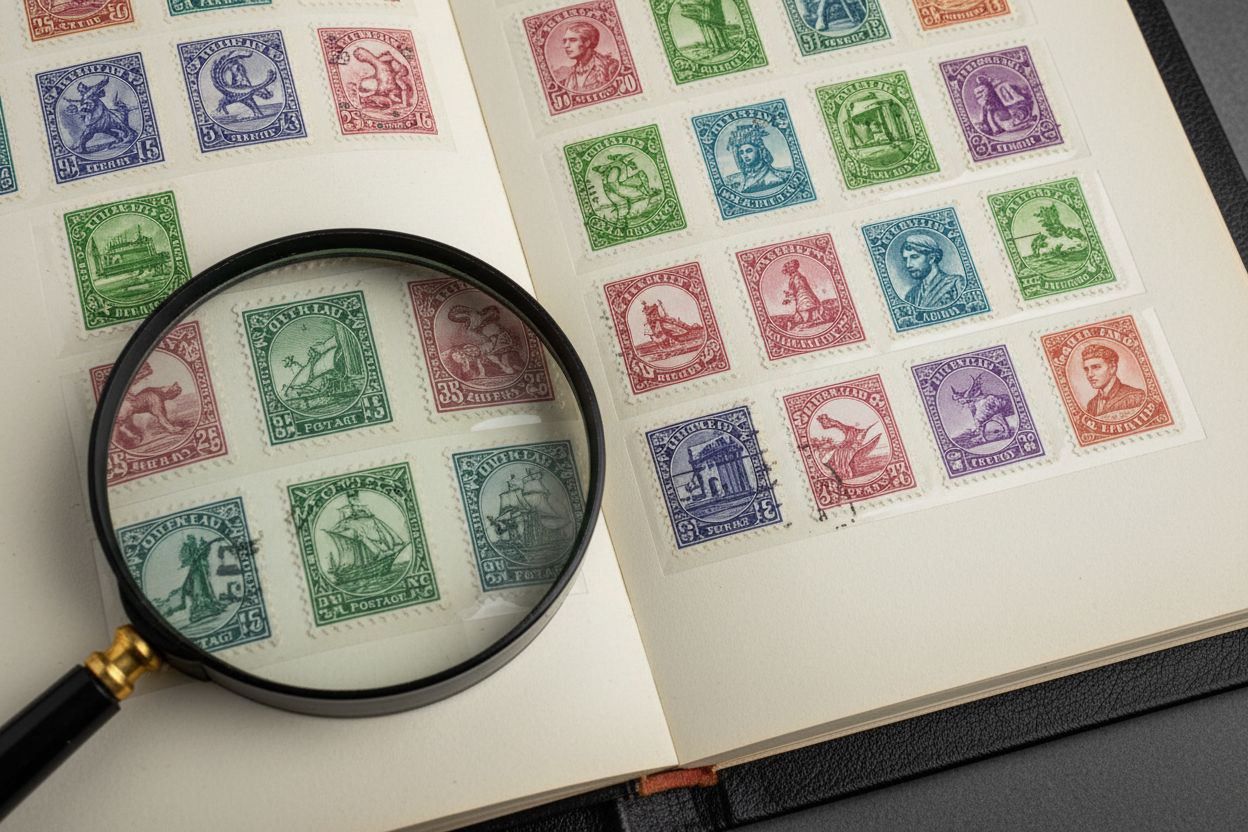
Stamp values span from fractions of a cent to millions of dollars, and the factors that separate valuable stamps from common ones are often invisible to casual observers. Color shades, perforation measurements, watermark varieties, and gum condition all create value distinctions within what appears to be the same stamp. Inherited collections frequently contain hidden treasures among thousands of common issues. Value Identifier's AI scans each stamp with the precision needed to catch these critical differences.
What your scan returns
Point your camera at your stamps and get a full report in seconds: identification, a market-based price range, condition, rarity and more. Here's an example of the kind of report you'll see.
Stamps
US Airmail C3a Position Sheet, 1918
$25 – $60
Condition
Fine
Rarity
Collectible
Year
1918
Early US airmail issues with original gum and light hinging. Common airmails stay affordable, while the famous Inverted Jenny error from this series is a million-dollar stamp.
Fun fact
Only one sheet of 100 Inverted Jenny errors was ever sold to the public.
Key factors that determine Stamps value
Country & Catalog Number
The issuing country and specific catalog reference (Scott, Stanley Gibbons, Michel) establish the base identity and market range for every stamp.
Condition & Centering
Mint never-hinged stamps with perfect centering command the highest premiums. Used stamps are valued by cancellation quality and overall preservation.
Rarity & Print Quantity
Limited print runs, errors, and stamps from short-lived postal administrations create genuine scarcity that drives prices.
Gum Condition
Original gum quality, never hinged, lightly hinged, or no gum, creates distinct price tiers for unused stamps.
Errors & Varieties
Inverted centers, color errors, imperforate stamps, and other production anomalies are among the most valuable philatelic items.
Tips for scanning your Stamps
Place stamps on a dark background and photograph them at close range, ensuring perforations and design details are sharp and visible.
Use flat, even lighting without shadows to allow the AI to assess color shades accurately. Color varieties can dramatically affect value.
If the stamp is still on its envelope or postcard, photograph the entire cover, as postal history context can add significant value.
For mint stamps, avoid touching the gum side, and photograph face-up only. The AI assesses condition from the front image.
Stamps market overview
The stamp market has evolved with older collectors maintaining strong interest in classic issues while newer collectors gravitate toward topical themes and modern errors. Online auction platforms have improved price transparency and global access. Classic rarities from the 19th century continue to appreciate, while mid-range 20th-century material has stabilized at accessible price points.
Stamps valuation FAQ
Can Value Identifier tell if a stamp is rare?+
Yes. The AI identifies the specific stamp issue and cross-references it against rarity databases. It flags stamps known to have low print runs, significant varieties, or high collector demand.
Does it work for stamps from any country?+
Value Identifier recognizes stamps from virtually every nation and postal territory, including historical entities that no longer exist. The AI references multiple international catalogs for comprehensive coverage.
Are used stamps worth anything?+
Many used stamps have significant value, especially those with clean cancellations, scarce postmarks, or from early postal periods. Some used stamps are actually rarer and more valuable than their unused counterparts.
How should I store stamps to preserve value?+
Use acid-free stamp mounts or stockbooks, store in cool and dry conditions, and handle with stamp tongs. Never use tape, glue, or paper clips on stamps. Value Identifier can help you prioritize which stamps deserve the most careful preservation.
More books and paper collectibles
Ready to identify & value your Stamps?
Download Value Identifier free and scan your first items, no account needed.