Get an Accurate Silverware Valuation
Sterling silver flatware and hollowware represent both precious metal value and collectible pattern desirability. Value Identifier's AI identifies silver patterns, makers, purity marks, and piece types to deliver pricing that accounts for both melt value and collector premium.


Try it free, identify any item
Snap or upload a photo and get its value in seconds
Why knowing your Silverware value matters
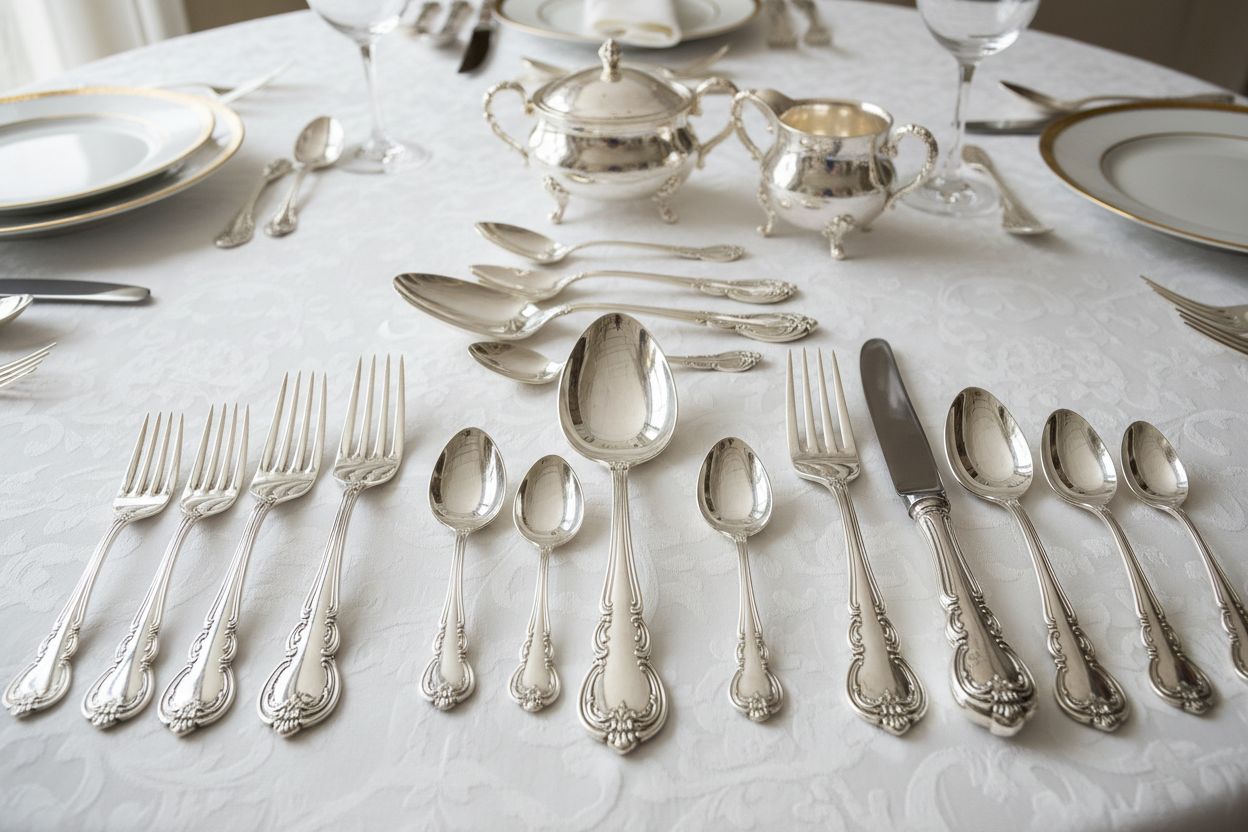
Sterling silverware contains real precious metal value that fluctuates with silver spot prices, but collector premiums for desirable patterns can far exceed melt value. Identifying your pattern is essential. Certain patterns from makers like Gorham, Tiffany, Reed & Barton, and Wallace are actively sought by collectors completing sets. Silver-plated pieces, while attractive, have no melt value and limited collector interest. Value Identifier distinguishes between sterling and plate, identifies patterns, and calculates both melt and collector value.
What your scan returns
Point your camera at your silverware and get a full report in seconds: identification, a market-based price range, condition, rarity and more. Here's an example of the kind of report you'll see.
Silverware
Gorham Sterling Flatware, 42 pc
$700 – $1,100
Condition
Very Good
Rarity
Sterling
Year
c. 1940
A sterling service for eight in the Chantilly pattern, about 1,400 grams of weighable silver. Melt value floors the price; complete matched sets earn a collector premium above it.
Fun fact
Gorham's Chantilly is the best-selling sterling flatware pattern ever made.
Key factors that determine Silverware value
Sterling vs. Silver-Plated
Sterling silver (.925) has significant melt value plus potential collector premiums. Silver-plated items have minimal material value regardless of appearance.
Pattern & Maker
Desirable patterns from prestigious makers (Tiffany Chrysanthemum, Gorham Chantilly, Wallace Grand Baroque) command premiums above melt value.
Weight
Total silver weight in troy ounces directly determines melt value, which serves as the floor price for sterling pieces.
Piece Type & Completeness
Full place settings and service pieces are worth more per piece than individual forks or spoons. Complete sets command premiums over partial collections.
Condition
Deep scratches, dents, bent tines, and monogram removal reduce both aesthetic appeal and value.
Tips for scanning your Silverware
Photograph the front and back of a representative piece, capturing the pattern design and any hallmarks or maker's stamps on the reverse.
Include close-ups of any markings. 'Sterling,' '.925,' or maker's marks are essential for determining silver purity and pattern identification.
Photograph the full set laid out to show completeness and piece count, as set value differs from individual piece pricing.
Capture any monograms, as their presence and style affect desirability and may help trace pattern and period.
Silverware market overview
The sterling silver flatware market has bifurcated between melt-value buying (driven by silver spot prices) and pattern collecting (driven by demand for specific designs). Active patterns maintain healthy premiums above melt, while obscure patterns tend to trade near melt value. The formal dining trend has weakened demand for large service pieces, while everyday-use place settings maintain better relative value.
Silverware valuation FAQ
How do I tell if silverware is sterling or plated?+
Value Identifier looks for 'Sterling,' '.925,' or 'SS' marks that indicate genuine sterling silver. Plated items are typically marked 'EP,' 'EPNS,' 'Silver Plate,' or have no precious metal markings. The AI identifies these markers from photographs.
Is silver-plated flatware worth anything?+
Silver-plated flatware has minimal material value and limited resale market. Some antique plated sets from prestigious makers have modest collector interest, but the vast majority of silver plate sells for very low prices.
Does Value Identifier know silverware patterns?+
Yes. The AI recognizes hundreds of flatware patterns from major American and European silver manufacturers, identifying the specific pattern name and maker to determine collector market value.
Should I polish silver before scanning?+
Light tarnish does not affect the AI's identification ability. Heavy tarnish that obscures the pattern should be gently cleaned, but aggressive polishing can damage patina that contributes to antique character.
More jewellery and precious metals
Ready to identify & value your Silverware?
Download Value Identifier free and scan your first items, no account needed.