How to Find What Your Pocket Watch Is Worth
Pocket watches represent the pinnacle of portable mechanical timekeeping before wristwatches took over, and quality examples from major American and European makers are prized by collectors and horological enthusiasts. Value Identifier's AI identifies brands, movements, case materials, and complications to deliver pricing informed by the specialized pocket watch market.


Try it free, identify any item
Snap or upload a photo and get its value in seconds
How to find the value of a pocket watch
Five steps, in order, starting with the one most people skip: open it. On an American pocket watch the movement inside carries the value, not the case you can see — and pricing the case is the standard way to get this wrong.
- 1
Open the back and find the movement
The case is not the watch. On American pocket watches the movement inside carries most of the value, and cases were sold separately from movements — a jeweller would pair whichever the customer could afford. Two identical-looking watches can differ tenfold once you look inside.
Watch out: Most backs unscrew anticlockwise or pop open with a thumbnail in the lip. If it resists, stop and take it to a jeweller rather than prying.
- 2
Read the maker and the serial number
Both are engraved on the top plate of the movement. The maker will say something like Elgin National Watch Co., Waltham, Hamilton, Illinois or Howard. The serial number is the long number stamped alongside it.
Watch out: Use the serial on the MOVEMENT, not the one on the case. They are different numbers and the case one tells you almost nothing.
- 3
Count the jewels
The movement states its own jewel count, printed right on the plate. This is the single strongest signal of grade in an American watch: 7 to 11 is entry level, 15 to 17 is solid mid-grade, and 21 or more means it was built to railroad standards.
Watch out: Look for text reading "17 JEWELS" or "21 JEWELS". Also note any wording about adjustments — "Adjusted to 5 Positions" is a mark of a higher grade.
- 4
Work out what the case is made of
Solid gold is stamped 14K, 18K or 750 inside the back cover. Gold filled is a thin gold layer over base metal and is usually marked with a warranty period — "Warranted 20 Years" means gold filled, not solid. Coin silver and sterling are marked as such.
Watch out: A "Warranted 25 Years" stamp is the most misread mark in the hobby. It is a wear guarantee on plating, not a gold content mark, and it does not mean solid gold.
- 5
Date it, then price it
Cross-reference the movement serial against the maker's production records — the Pocket Watch Database has free lookup tables for the American makers and will give you the year and often the production run. Then put the grade, case and running condition together to get a range.
Watch out: Whether it runs matters more than people expect: a watch that keeps time is worth roughly 30 to 50% more than the identical watch that does not.
Now put it together
With the jewel count and case material from steps 3 and 4, this gives you the range a dealer would quote.
Typical dealer range
$50 – $200
Solid gold cases carry metal value on top of everything else, so even a dead low-grade movement in a 14K case has a floor. That is the one case where the case really does outrank the movement.
A starting range, not an appraisal. A rare grade, a low production run, an unusual dial or a named retailer can multiply these figures. Anything you think might clear $1,000 is worth a hands-on appraisal.
Can't open it, or can't read the engraving?
Photograph the movement and the AI reads the maker, serial and jewel count off the plate — including the worn engraving that is hard to make out by eye.
Scan my watchPocket watch values by grade and case
Read down the column your case is in and across from your jewel count. Ranges are for a running watch; knock about a third off one that doesn't.
| Jewel count | Base metal | Coin silver or sterling | Gold filled | Solid gold |
|---|---|---|---|---|
| 7 – 11 jewels | $15 – $60* | $40 – $150 | $30 – $120 | $250 – $800 |
| 15 – 17 jewels | $25 – $90 | $60 – $250 | $50 – $200* | $350 – $1,200 |
| 21+ jewels (railroad grade) | $80 – $300 | $150 – $500 | $150 – $800* | $500 – $2,500* |
* Combinations with a published market quote behind them. The rest are interpolated between those anchors, so treat them as the rougher figures they are.
Ranges compiled from 2026 pricing published by Estimonia, Invaluable, Pocket Watch Database and Pieces of Time, plus dealer listings for railroad grades. Serial-number dating tables for American makers are free at the Pocket Watch Database. Last reviewed August 2026.
Why knowing your Pocket Watches value matters
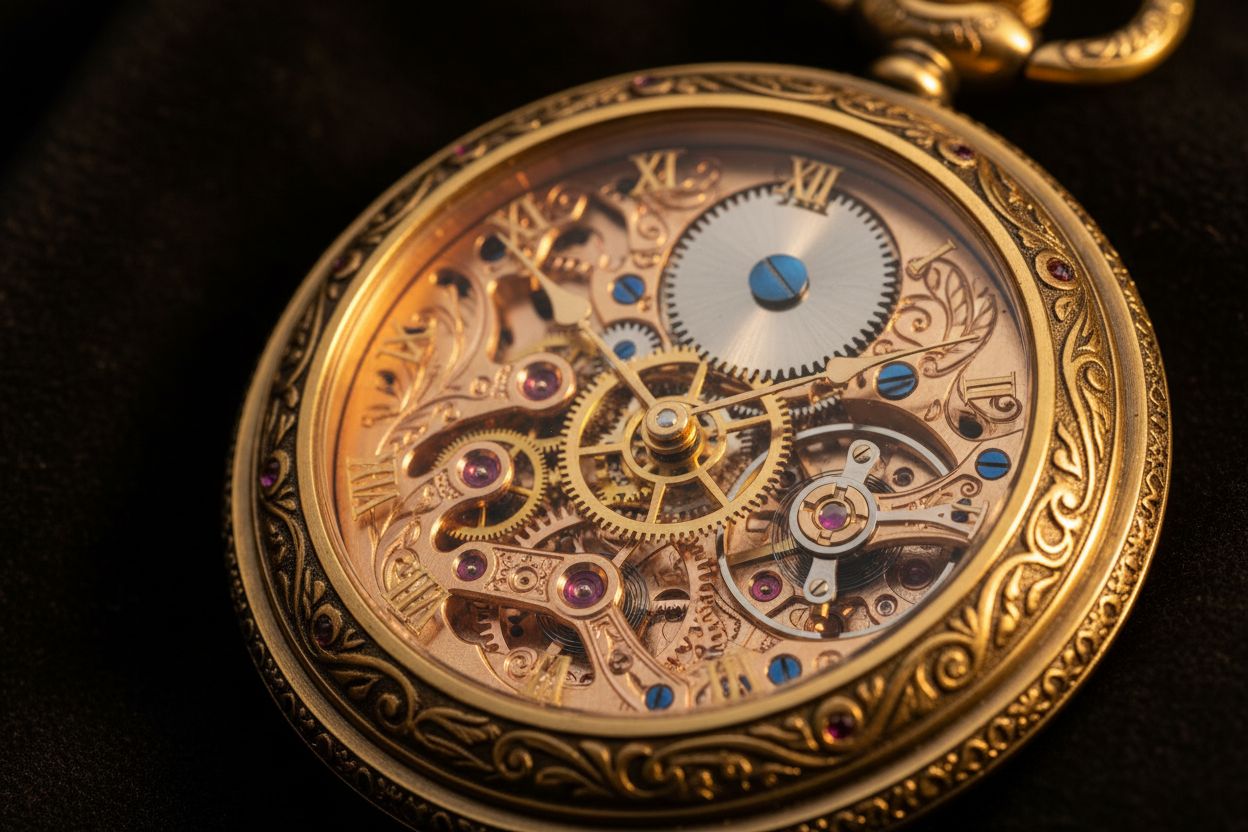
Pocket watches range from common timepieces worth their gold case weight to masterworks of horological art worth tens of thousands. American makers like Waltham, Elgin, Hamilton, and Howard produced watches in various grades that create wide value ranges within the same brand. Railroad-grade watches with specific requirements for accuracy command premiums. Swiss makers from Patek Philippe to anonymous movement makers span an even broader quality and price spectrum. Value Identifier identifies the specific grade and quality of your pocket watch to determine its true market value.
What your scan returns
Point your camera at your pocket watches and get a full report in seconds: identification, a market-based price range, condition, rarity and more. Here's an example of the kind of report you'll see.
Pocket Watches
Elgin 16s Gold-Filled Pocket Watch
$100 – $200
Condition
Running
Rarity
American Classic
Year
c. 1915
A running Elgin in a warm gold-filled case with clean enamel dial. Railroad-grade movements with 21+ jewels are where American pocket watch values jump.
Fun fact
Railroad watches had strict accuracy standards after an 1891 crash caused by a stopped watch.
Key factors that determine Pocket Watches value
Maker & Grade
The manufacturer and specific movement grade (from basic to railroad-grade to premium) are the primary value determinants for pocket watches.
Case Material
Solid gold (14K, 18K), gold-filled, silver, and base metal cases create distinct value tiers. Solid gold cases have intrinsic metal value.
Movement Complexity
Complications such as repeaters, chronographs, and calendar functions add significant value above time-only movements.
Condition
Dial condition, case preservation, movement function, and crystal clarity all contribute to the overall condition grade.
Provenance
Watches with documented ownership, railroad service records, or notable connections command premiums over anonymous examples.
Tips for scanning your Pocket Watches
Photograph the watch face showing the dial, hands, and any complications or subsidiary dials clearly.
Open the case back and photograph the movement, capturing the maker's name, grade, serial number, and jewel count engraved on the movement.
Include the case exterior showing any engraving, engine turning, or decorative elements that contribute to aesthetic value.
Photograph inside the case back for any inscriptions, presentation engraving, or assay marks that provide provenance and material information.
Pocket Watches market overview
The pocket watch market is specialized but active, with collectors focused on American railroad watches, Swiss complications, and decorative case art. Quality American railroad-grade watches from Hamilton, Ball, and Elgin maintain steady demand among collectors who appreciate their precision engineering and historical significance. High-grade Swiss complications command strong prices at horological auctions. The market rewards condition and completeness, with original dials particularly important.
Pocket Watches valuation FAQ
How does Value Identifier identify pocket watch grades?+
The AI reads movement engravings showing maker name, grade designation, serial number, and jewel count. This information identifies the specific movement quality tier and production date for accurate pricing.
Are gold pocket watch cases worth their weight?+
Solid gold cases have melt value based on gold weight and karat. Gold-filled cases have minimal metal value. The watch's collector value often exceeds melt value for quality pieces, but melt value provides a reliable floor.
What pocket watches are most valuable?+
Patek Philippe, high-grade Hamilton (950, 992B), Ball railroad watches, and American repeater watches consistently command the strongest prices. Complicated Swiss watches and watches with historical provenance also achieve premium results.
Does a pocket watch need to run to be valuable?+
Running condition adds value, but quality non-running watches from premium makers retain collector interest. Movement condition (clean, no broken parts) is more important than whether the watch currently runs, as skilled watchmakers can restore most mechanical issues.
Ready to identify & value your Pocket Watches?
Download Value Identifier free and scan your first items, no account needed.