Discover the True Value of Your Bourbon & Whiskey
The secondary market for premium bourbon and whiskey has exploded, with allocated bottles and discontinued expressions achieving prices that stagger even seasoned collectors. Value Identifier's AI reads labels, identifies distilleries, recognizes vintage bottlings, and references current market data to price your spirits accurately.


Try it free, identify any item
Snap or upload a photo and get its value in seconds
Why knowing your Bourbon & Whiskey value matters
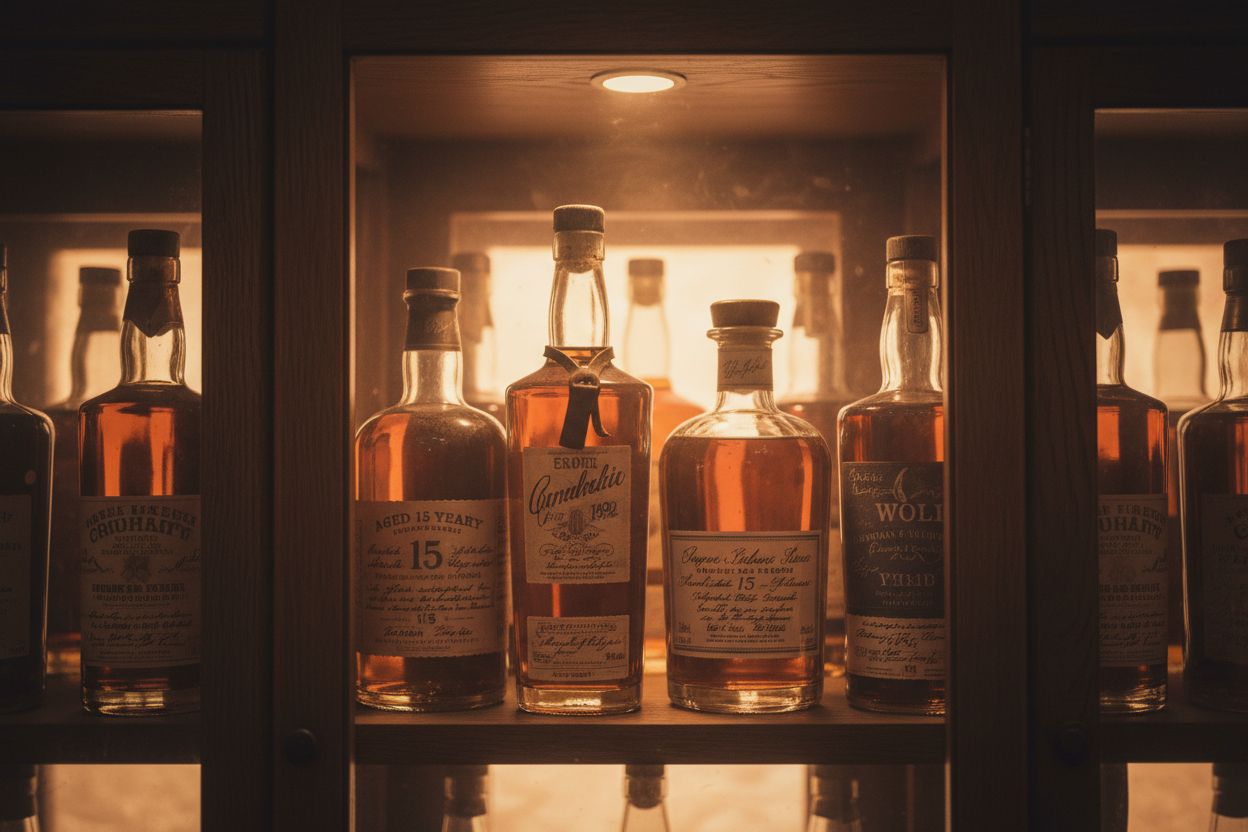
A bottle of Pappy Van Winkle purchased at retail for $100 can sell for $2,000+ on the secondary market, and even more accessible allocated bourbons regularly trade at multiples of their retail prices. Discontinued expressions from shuttered distilleries become increasingly rare and valuable over time. Bottle condition, fill level, and label integrity all affect secondary market pricing. Value Identifier helps you understand the current market value of bottles in your collection or inherited from others.
What your scan returns
Point your camera at your bourbon & whiskey and get a full report in seconds: identification, a market-based price range, condition, rarity and more. Here's an example of the kind of report you'll see.
Bourbon & Whiskey
Blanton's Single Barrel, Full Set Stoppers
$120 – $200
Condition
Sealed
Rarity
Allocated
Year
Recent
A sealed Blanton's with intact tax strip. The horse-stopper collecting craze and allocation scarcity keep secondary prices at roughly double retail.
Fun fact
Blanton's stoppers spell B-L-A-N-T-O-N-S across eight collectible horse poses.
Key factors that determine Bourbon & Whiskey value
Brand & Expression
Pappy Van Winkle, Buffalo Trace Antique Collection, and other allocated bourbons command the highest secondary market premiums. Scotch whisky follows its own tier structure.
Age Statement
Older age statements generally command higher prices, though exceptional younger expressions can also achieve premium pricing.
Vintage & Bottling Date
Specific vintage years and bottling dates affect pricing, with older bottlings from discontinued eras carrying additional premiums.
Bottle Condition
Label condition, fill level, seal integrity, and overall presentation affect buyer confidence and secondary market value.
Limited Release Status
Annual limited releases, single-barrel selections, and distillery-exclusive bottlings carry premiums tied to their production scarcity.
Tips for scanning your Bourbon & Whiskey
Photograph the full front label clearly, ensuring the brand name, expression name, age statement, and proof are all readable.
Include the back label if present, as batch numbers, bottling dates, and barrel information help identify specific releases.
Capture the fill level (amount of liquid visible in the bottle) and the condition of the tax stamp or seal.
For boxed or tubed bottles, photograph the packaging separately, as original packaging adds value for collector-grade spirits.
Bourbon & Whiskey market overview
The bourbon secondary market has matured rapidly, with dedicated platforms and collector communities supporting transparent pricing and active trading. Allocated bourbon from the Buffalo Trace family of brands (Pappy Van Winkle, Weller, Blanton's) drives the most volume and attention. Japanese whisky has emerged as a premium collectible category with extreme premiums on discontinued expressions. Scottish single malts from closed distilleries maintain steady appreciation among whisky collectors.
Bourbon & Whiskey valuation FAQ
Is it legal to sell bourbon on the secondary market?+
Laws regarding secondary market spirit sales vary by state and country. Some jurisdictions prohibit private sales of spirits without a license. Value Identifier provides market valuations; legal compliance for transactions is the seller's responsibility.
What bourbon is most valuable?+
Pappy Van Winkle (23-year, 20-year, 15-year), Buffalo Trace Antique Collection releases, and old bottlings of iconic brands command the highest secondary market prices. Discontinued expressions and single-barrel selections also achieve premium pricing.
Does age always equal higher value?+
While older age statements generally command higher prices within a brand line, exceptional younger expressions and limited releases can outperform older standard releases. The AI evaluates each expression on its specific market data.
How does fill level affect bottle value?+
Lower fill levels (indicating evaporation or leakage) reduce value, particularly for older bottles. Full fill levels provide buyer confidence about storage quality and seal integrity.
More bottles worth checking
Ready to identify & value your Bourbon & Whiskey?
Download Value Identifier free and scan your first items, no account needed.