What Is Your Silver Certificate Worth?
Try it free, identify any item
Snap or upload a photo and get its value in seconds
Silver certificates are US paper currency once redeemable for silver, identified by a blue seal and printed across series from the 1800s to 1957. Common small-size notes carry a modest premium, while early large-size notes and star notes can be worth much more. Value Identifier reads the series and condition.


Why knowing your Silver Certificate value matters
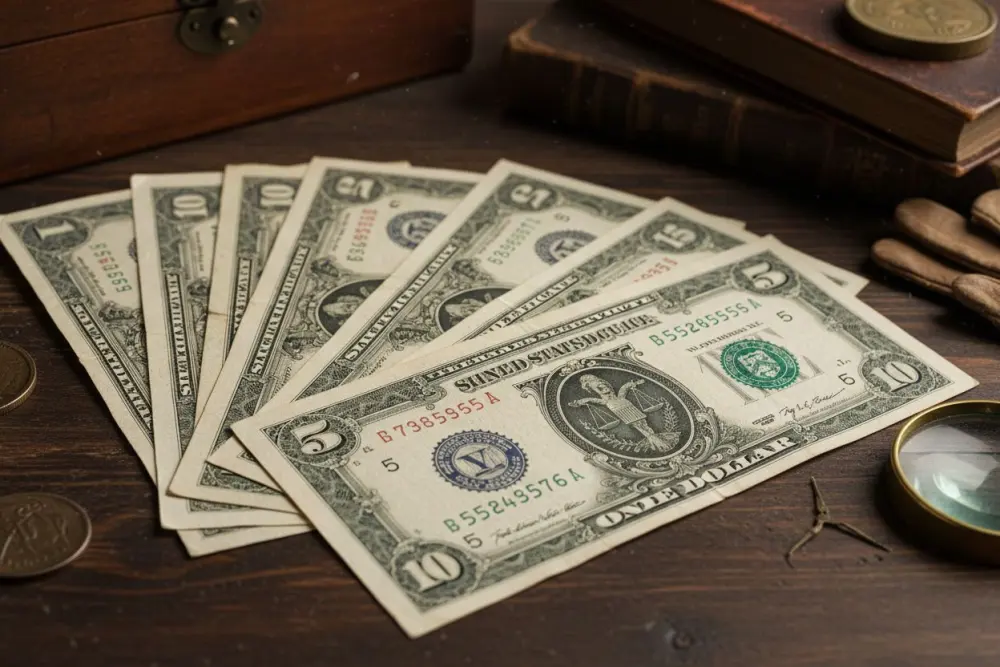
People find silver certificates in old wallets and estates and assume they are rare because they look different from modern bills. The common 1935 and 1957 one-dollar notes are only worth a small premium over face. The value lives in earlier series, large-size notes, star notes, and high grades, so identifying the exact note is what separates a couple of dollars from a couple of hundred.
What your scan returns
Point your camera at your silver certificate and get a full report in seconds: identification, a market-based price range, condition, rarity and more. Here's an example of the kind of report you'll see.
Silver Certificate
1957 $1 Silver Certificate, Star Note
$8 – $25
Condition
Crisp AU
Rarity
Star Replacement
Year
1957
A crisp blue-seal certificate with the star prefix marking a replacement note. Stars, low serials, and uncirculated paper turn common notes into collectible ones.
Fun fact
Silver certificates could be redeemed for actual silver dollars until 1968.
Key factors that determine Silver Certificate value
Series & Size
Large-size notes from before 1928 are generally worth far more than the common small-size 1935 and 1957 one-dollar notes.
Denomination
Higher denominations and scarcer designs, such as certain $5 and $10 notes, carry stronger premiums.
Star Notes
Replacement notes with a star in the serial number are scarcer and worth a premium over standard notes.
Condition
Crisp uncirculated notes with sharp corners and no folds are worth a multiple of worn, soft, or torn examples.
Seal & Signatures
Seal color, series year, and signature combinations affect which notes are scarce and desirable.
Tips for scanning your Silver Certificate
Photograph the full face of the note flat, capturing the blue seal, series date, and serial number.
Shoot the back as well, since design and condition both matter to identification and grade.
Check the serial number for a star, which marks a scarcer replacement note.
Handle gently and never tape, trim, or flatten with moisture. Repairs and damage sharply reduce value.
Silver Certificate market overview
The silver certificate market is broad and accessible at the low end, where common one-dollar notes trade for small premiums, and deepens quickly for large-size notes, scarce series, star notes, and high grades. Condition drives value steeply, and certified notes dominate the upper market where authenticity and grade carry premiums.
Silver Certificate valuation FAQ
Are silver certificates worth more than face value?+
Usually at least a small premium. Common 1935 and 1957 one-dollar notes trade for a little over a dollar, while large-size notes, scarce series, and star notes can be worth much more.
Can I still redeem a silver certificate for silver?+
No. Redemption for silver ended in 1968. Silver certificates remain legal tender at face value, but their worth to collectors is in the note itself.
What makes a silver certificate valuable?+
Early large-size issues, scarce series and denominations, star notes, and high grade. The common small-size dollar notes are the least valuable.
How can I tell a silver certificate from a regular bill?+
Look for the words SILVER CERTIFICATE across the top and a blue Treasury seal rather than the green seal on Federal Reserve Notes.
Ready to identify & value your Silver Certificate?
Download Value Identifier free and scan your first items, no account needed.