Is Your 1943 Steel Penny Actually Rare?
Try it free, identify any item
Snap or upload a photo and get its value in seconds
In 1943 the US Mint struck pennies in zinc-coated steel to save copper for the war. Hundreds of millions exist, so the steel cent itself is common. The valuable coin is the off-metal copper 1943 cent, struck by mistake, one of the most famous errors in American coinage.


Why knowing your 1943 Steel Penny value matters
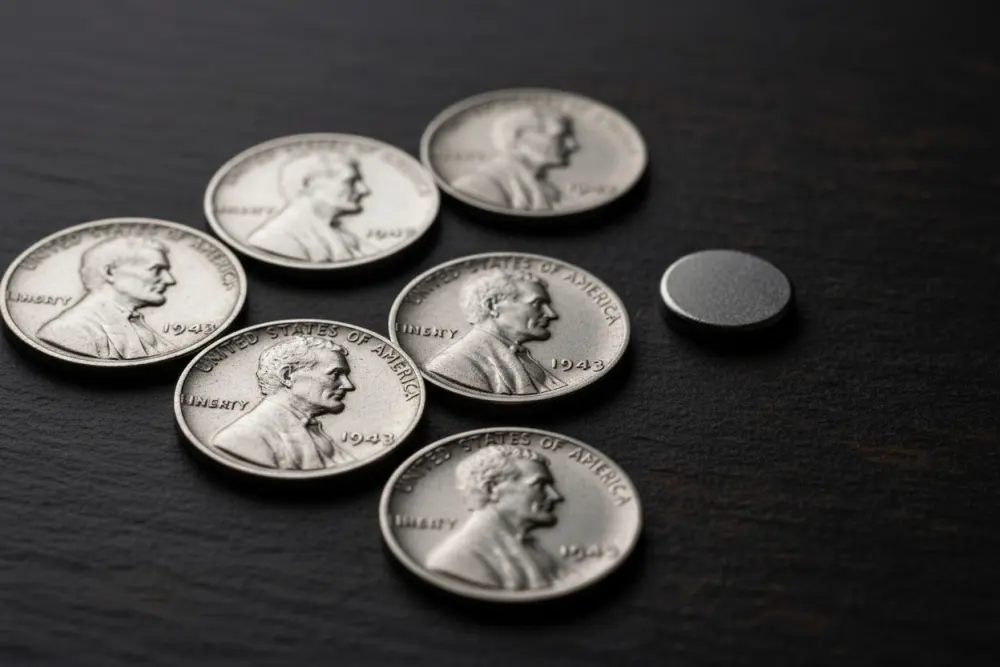
This is the single most misunderstood coin in circulation. People assume any 1943 penny is a jackpot because it looks silver. In reality a circulated steel cent is worth around ten to fifty cents. The real money is in the rare 1943 copper error and the 1944 steel error, and telling them apart takes one simple test most owners never run.
What your scan returns
Point your camera at your 1943 steel penny and get a full report in seconds: identification, a market-based price range, condition, rarity and more. Here's an example of the kind of report you'll see.
1943 Steel Penny
1943 Steel Cent, Philadelphia
$0.50 – $5
Condition
Circulated
Rarity
Common
Year
1943
A zinc-coated steel wartime cent, magnetic and common in circulated grades. The famous rarity is the 1943 copper error — a cent that sticks to a magnet is the ordinary steel one.
Fun fact
A genuine 1943 copper cent sold for $372,000 — but fewer than 30 exist.
Key factors that determine 1943 Steel Penny value
Metal: Steel vs Copper
A magnet decides almost everything. Steel cents stick and are common. A genuine 1943 copper cent does not stick and can be worth six figures.
Condition
Steel cents corrode easily. Bright, uncirculated, fully lustrous examples are worth far more than the spotted, rusty coins most people own.
Mint Mark
Philadelphia with no mark, Denver with a D, and San Francisco with an S were all struck. The differences are modest for steel but matter at high grade.
Reprocessing
Many steel cents were stripped and replated to look new. Reprocessed coins carry no premium and are not original.
Authentication
Counterfeit copper 1943 cents, whether copper-plated steel or altered 1948 dates, are everywhere. Any non-magnetic 1943 cent needs professional verification.
Tips for scanning your 1943 Steel Penny
Run a magnet test first and note the result. It is the most important single data point for this coin.
Photograph the full date clearly so the AI can confirm 1943 and check for date alteration.
Capture the mint mark area below the date and the overall surface so corrosion can be assessed.
If the coin does not stick to a magnet, stop and get it authenticated before assuming a value.
1943 Steel Penny market overview
Common steel cents are a bulk item and sell for pennies. The market that matters is the error market, where authenticated 1943 copper and 1944 steel cents draw intense competition at major auctions. Because fakes flood this niche, certified examples command a large premium over raw claims, which mostly turn out to be plated steel.
1943 Steel Penny valuation FAQ
How much is a 1943 steel penny worth?+
A typical circulated steel cent is worth about ten to fifty cents. Bright uncirculated examples can reach a few dollars. They are common, not rare.
How do I know if I have the rare copper 1943 penny?+
Test it with a magnet. Steel cents stick, but a genuine copper 1943 cent does not. A non-magnetic coin is worth authenticating, though most turn out to be copper-plated steel fakes.
Why does my 1943 penny look silver?+
It was struck in zinc-coated steel rather than copper, to conserve copper for World War II. The silver color is normal for the year and does not make it rare.
Are reprocessed 1943 steel pennies valuable?+
No. Many were chemically stripped and replated to look new. Collectors want original surfaces, so reprocessed coins carry no premium.
Ready to identify & value your 1943 Steel Penny?
Download Value Identifier free and scan your first items, no account needed.