What Is Your Walking Liberty Half Dollar Worth?
Try it free, identify any item
Snap or upload a photo and get its value in seconds
The Walking Liberty half dollar, struck from 1916 to 1947, is widely considered one of the most beautiful US coins, which is why its design was revived for the American Silver Eagle. It is 90% silver, giving every coin a solid floor, with key dates and high grades worth much more. Value Identifier reads the details.


Why knowing your Walking Liberty Half Dollar value matters
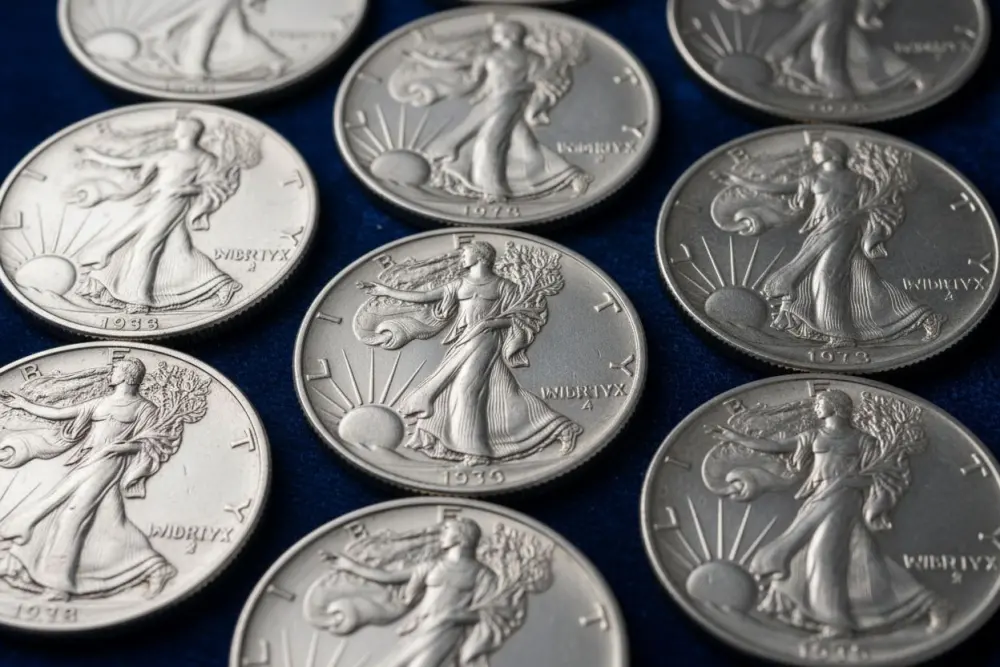
Because they are 90% silver, even common Walking Liberty halves are worth several times face, so a worn example is never just fifty cents. Above the silver floor, the early dates and the famous 1921 issues carry strong premiums, and the series is notorious for weak strikes that affect grade. Knowing your date and strike quality keeps you from selling a scarce coin for melt.
What your scan returns
Point your camera at your walking liberty half dollar and get a full report in seconds: identification, a market-based price range, condition, rarity and more. Here's an example of the kind of report you'll see.
Walking Liberty Half Dollar
1943 Walking Liberty Half Dollar
$15 – $25
Condition
Extremely Fine
Rarity
Common Date
Year
1943
A wartime 90% silver half with strong detail on Liberty's gown. Widely considered America's most beautiful coin design — silver value floors it, beauty sells it.
Fun fact
The Walking Liberty design was revived for the modern Silver Eagle in 1986.
Key factors that determine Walking Liberty Half Dollar value
Silver Content
Each coin contains about 0.3617 troy ounces of silver, a melt floor that moves with the spot price.
Date & Mint Mark
Keys include 1916, 1916-S, 1921, 1921-D, and 1921-S, and the 1938-D. Early mint marks sit on the obverse, later ones on the reverse.
Strike Quality
Walking Liberty halves are famous for weak central strikes. A fully struck coin with sharp detail commands a premium.
Condition
Wear shows first on Liberty's head and the eagle's breast feathers. Uncirculated examples of the keys are highly valued.
Surfaces & Luster
Original luster and clean surfaces beat cleaned or heavily marked coins of the same grade.
Tips for scanning your Walking Liberty Half Dollar
Photograph the obverse to show Liberty's striding figure and to read the date.
Shoot the reverse to capture the eagle and to locate the mint mark, which moved from obverse to reverse in 1917.
Use diffuse light to reveal luster and to judge strike sharpness at the center.
Avoid cleaning. Original silver surfaces always outsell polished ones in this series.
Walking Liberty Half Dollar market overview
Walking Liberty halves have broad, durable demand from both collectors and silver buyers. Common dates are liquid and trade near melt, while early keys, the 1921 issues, and fully struck high-grade coins have appreciated steadily. The design's revival on the Silver Eagle keeps it familiar to new collectors, supporting ongoing interest.
Walking Liberty Half Dollar valuation FAQ
How much silver is in a Walking Liberty half dollar?+
About 0.3617 troy ounces of pure silver at 90% silver. That gives every coin a melt value several times its fifty-cent face.
What is the key date Walking Liberty half dollar?+
The 1921, 1921-D, and 1921-S are the major keys, along with the 1916 first-year issues and the scarce 1938-D. These command strong premiums in all grades.
Where is the mint mark on a Walking Liberty half?+
On 1916 and some 1917 coins it sits on the obverse below IN GOD WE TRUST. From 1917 onward it moved to the reverse, lower left near the rim.
Why is the design on my half dollar the same as a Silver Eagle?+
The US Mint revived Adolph Weinman's Walking Liberty design for the obverse of the American Silver Eagle in 1986, which is why the two look alike.
Ready to identify & value your Walking Liberty Half Dollar?
Download Value Identifier free and scan your first items, no account needed.