What Are Your Ancient Coins Worth?
Try it free, identify any item
Snap or upload a photo and get its value in seconds
Ancient coins span Greek, Roman, Byzantine, and other civilizations, struck in gold, silver, and bronze over two thousand years. Identifying the issuing authority and type is the first and hardest step, and it drives everything else. Value Identifier reads the portrait, inscription, and design to estimate origin and value.


Why knowing your Ancient Coins value matters
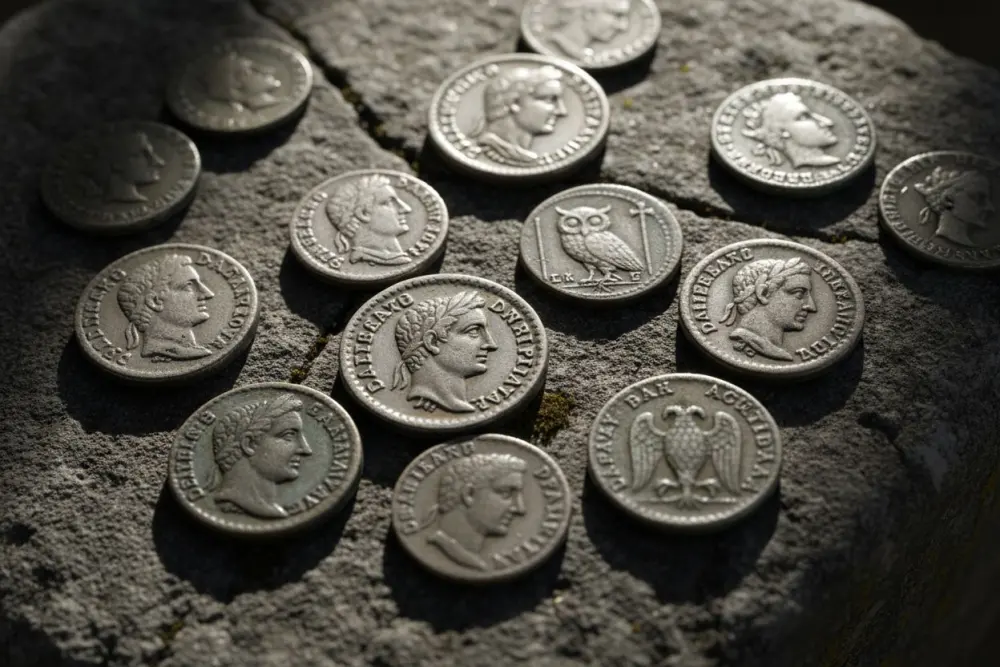
Ancient coins are bought and sold on attribution. The same worn bronze can be a common late Roman issue worth a few dollars or a scarce ruler worth hundreds, and only correct identification tells you which. The market is also full of tourist replicas and modern forgeries, so knowing what you actually have, and whether it is genuine, matters more here than in almost any other area of collecting.
What your scan returns
Point your camera at your ancient coins and get a full report in seconds: identification, a market-based price range, condition, rarity and more. Here's an example of the kind of report you'll see.
Ancient Coins
Roman Denarius of Trajan
$80 – $200
Condition
Very Fine
Rarity
Collectible
Year
c. 110 AD
A silver denarius with a clear portrait of Trajan and legible legends. Ancient silver is surprisingly accessible — emperor popularity and portrait quality drive the range.
Fun fact
A Roman soldier earned about 300 denarii a year — you're holding a day's pay.
Key factors that determine Ancient Coins value
Attribution
The ruler, mint, and exact type determine value. Common emperors and issues are inexpensive, while rare rulers and types are prized.
Metal
Gold issues such as the aureus and solidus sit at the top, followed by silver denarii and tetradrachms, then bronze, which is usually the most affordable.
Condition & Centering
Strong portraits, full legends, and well-centered strikes command premiums. Heavy wear, corrosion, and off-center strikes reduce value.
Authenticity
Replicas, cast forgeries, and tooled coins are widespread. Genuine surfaces and fabric are essential, and high-value coins need expert authentication.
Provenance
A documented history of ownership adds value and reassurance, and is increasingly important given laws on cultural property.
Tips for scanning your Ancient Coins
Photograph both sides in sharp focus so the AI can read the portrait, design, and any visible inscription.
Use raking light at a low angle to bring out worn detail and legends on dark surfaces.
Include a size reference or note the diameter, since module and weight help narrow the attribution.
Do not clean ancient bronze. Improper cleaning destroys patina and can ruin both the surface and the value.
Ancient Coins market overview
The ancient coin market is global, deep, and surprisingly accessible, with common bronzes available cheaply and rare gold and silver reaching strong prices at specialist auctions. Demand has grown as the field has moved online. Authenticity and provenance are the dominant concerns, and reputable certification or a clear ownership trail carries a meaningful premium.
Ancient Coins valuation FAQ
How can Value Identifier identify an ancient coin?+
The AI analyzes the portrait, design, and visible inscriptions to estimate the civilization, likely ruler, and type. Precise attribution of rare or worn coins often still benefits from a specialist's review.
Are ancient coins expensive?+
Not always. Common late Roman bronzes are inexpensive and a popular entry point, while rare rulers, fine portraits, and gold issues can reach high prices. Identification determines which you have.
How do I know my ancient coin is genuine?+
Genuine ancient coins show appropriate wear, fabric, and patina for their age and metal. Replicas and forgeries are common, so valuable coins should be authenticated by a recognized expert or service.
Should I clean my ancient coins?+
Generally no, especially bronze. Original patina is part of the value, and aggressive cleaning often causes permanent damage that lowers what a coin is worth.
Coins from further afield
Ready to identify & value your Ancient Coins?
Download Value Identifier free and scan your first items, no account needed.