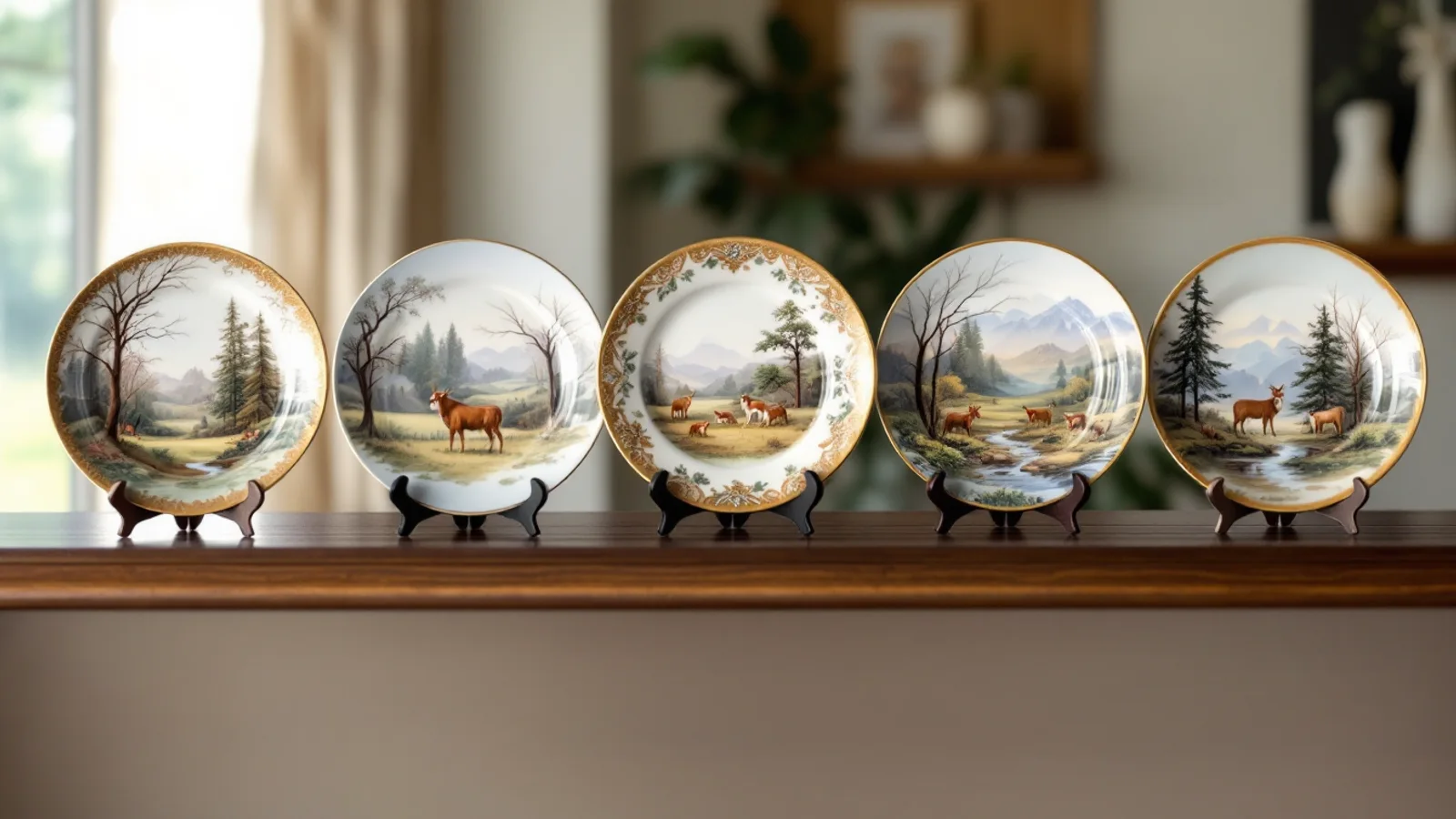
Most Bradford Exchange plates are worth a fraction of what they cost. That is not a guess: the secondary market has been saying it for twenty years. A few series still sell for $30 to $150 a plate. Here is how to tell which kind you have and what to do with a cabinet full of them.
The short answer
Wikipedia's entry on the Bradford Exchange summarizes the market plainly: most mass-produced Bradford Exchange plates from the 1980s and 1990s "now sell for a fraction of their original price, often under $15 on secondary markets," because of market saturation and changing tastes among younger buyers. Only certain themes, artist collaborations, or plates in pristine condition with original packaging and certificates tend to hold above-average value.
If you bought plates expecting them to appreciate, that is hard to read. It is still better to know before you spend time listing fifty plates one by one.
How this happened
The Bradford Exchange was founded in 1973 as The Bradford Gallery of Collector's Plates, and created its first live price quotation market for plates in 1983, according to Wikipedia. Over time it moved from facilitating trades between collectors to creating new lines of collectibles itself. Plates were marketed as limited editions with the promise of future appreciation.
The problem is in the word "limited." A plate limited to a set number of firing days can still be made in very large numbers. When millions of people buy collectibles at the same time, and nearly all of them keep the plates in perfect condition in their boxes, there is no scarcity later. iGuide's assessment matches: overproduction of certain series combined with a generational shift away from plate collecting has reduced demand, and many plates "fail to recoup their original cost."
The collector plate market turned down in the late 1990s and early 2000s, per Wikipedia, and has not come back.
The series that still sell
iGuide names the series that remain in demand, with typical values per plate:
| Series | Typical value per plate |
|---|
| The Wizard of Oz Collection | $50 to $150 |
| Disney collector's plates | $50 to $120 |
| Norman Rockwell series | $40 to $100, depending on condition |
| The Wildlife of North America series | $30 to $75 |
The pattern is clear: plates tied to characters and artists that still have fans today. A Wizard of Oz plate sells to Wizard of Oz collectors, not to plate collectors. A generic landscape or an anonymous artist's bird series has no fan base outside the plate market, and that market is small.
What adds value, and what does not
| Factor | Effect |
|---|
| Original box and certificate of authenticity | Helps; Wikipedia and iGuide both name it as a condition for above-average value |
| Complete series, in order | Can sell for more as a set, especially when the series is one of those above |
| Popular culture theme or well-known artist | The main driver of demand today |
| Mint condition, no wear on gold rims | Expected by buyers; anything less sells for less |
| "Limited edition" or "firing days" on the back | Adds nothing by itself; almost all of them say it |
| What you paid | Irrelevant to resale; the market sets the price |
What about other plate makers?
Bradford was the biggest name in collector plates, but it was not alone, and the same forces hit the whole category. Plates sold by subscription as limited editions from the 1970s through the 1990s share the same problem: huge production, careful storage by buyers, and a shrinking pool of collectors. The exceptions follow the same rule as Bradford's: plates tied to a famous artist, a lasting character or a real historical maker of fine porcelain can still find buyers. A plate with a famous name on the front sells to fans of that name. A plate whose only selling point was being a collectible plate has very few buyers left.
If you are not sure whether a plate is from Bradford or another maker, the backstamp will say. Treat any subscription plate from that era the same way: research the few with recognizable themes, and sell or donate the rest without spending much time on each.
Read the back of the plate
Turn each plate over. The backstamp usually gives the series name, the plate's title and number in the series, the artist, and the edition information. Write down the series name and plate number for each one. That is what you search, and what buyers search, so it goes in the listing title. Group plates by series before doing anything else: a complete series in one lot is the easiest thing to sell.
Research one plate in five minutes
- Read the backstamp: series name, plate title, plate number and artist.
- Search sold listings for the series name plus the plate title. Ignore active listings; look only at what sold.
- Note the condition of the sold examples. If they had boxes and certificates and yours does not, expect less.
- Check whether complete series sold. If they did, keep your series together.
- Decide in one pass: list individually, sell as a series, or put it in the mixed lot.
The same Bradford Group also includes the Hamilton Collection, Ashton-Drake Galleries and Hawthorne Village, according to Wikipedia. Plates, dolls and village pieces from those lines were sold the same way and face the same resale market, so the same research steps apply.
Where to sell
| Option | Good for | Watch out for |
|---|
| Online marketplaces | Plates from series with active fans | Shipping plates safely costs more than many plates sell for |
| Local listings or a garage sale | Mixed lots and generic themes | Low prices, but no shipping and no breakage |
| Estate sale company | Large collections as part of a household sale | Commission; plates sell at the end of the sale |
| Donation | Plates that will not sell | None; it clears space |
What to do with a collection
| You have | Best move |
|---|
| Plates from the series iGuide lists | Check sold listings for each plate title and sell individually or as a complete series. |
| A complete series with boxes and certificates | Sell as one lot; buyers of sets pay for completeness. |
| Assorted plates from many series | Sell as a mixed lot locally, or donate. Individual listings cost more time than they return. |
| Plates you like looking at | Keep them on the wall. They are worth more to you there than at a sale. |
| Damaged, faded or missing boxes, generic themes | Donate or sell for a dollar or two each at a yard sale. |
A note on "we buy plates" offers
Many dealers who once supported this niche have left it, as iGuide notes. If someone offers to buy an entire plate collection for a meaningful sum, compare the offer against sold listings for the specific series first. And be wary of any service that wants an upfront fee to "appraise" or "list" ordinary collector plates: on most collections the fee will be more than the plates bring.
Why we are telling you this
The honest number saves time. If most of your plates are common series, the best outcome is to find the few that do sell, sell those properly, and move the rest quickly. Spending weekends photographing and shipping $8 plates is a bad trade. The same logic applies to other mass-produced collectibles from the same era; the Hummel figurines guide shows the same split between common and scarce pieces.
For other porcelain, the china and porcelain guide and the Noritake china guide cover dinnerware, which often sells better than decorative plates because people use it. For figurines sold alongside plates, see the figurine value guide.