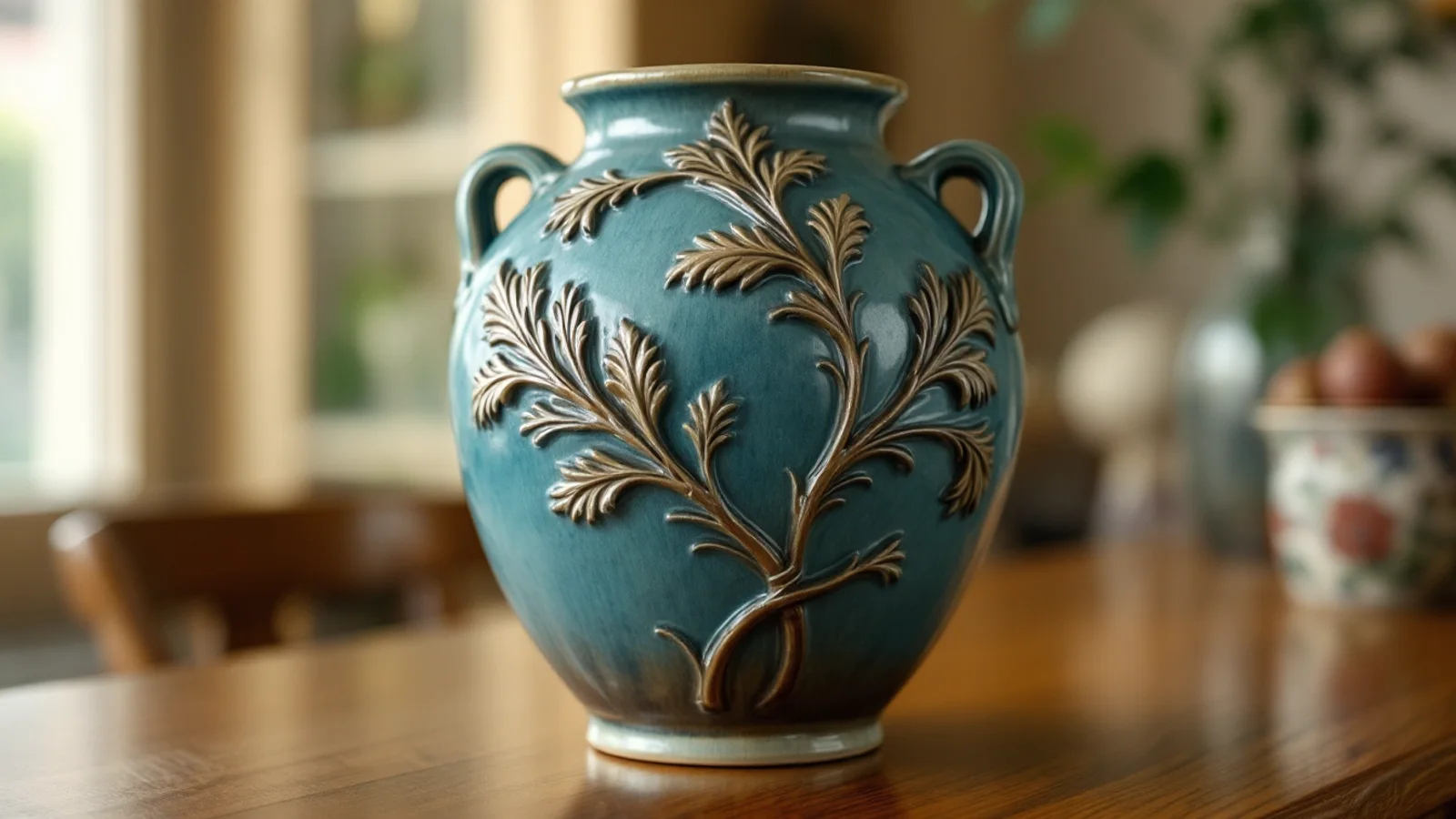
Roseville is one of the most collected names in American art pottery, and its prices run from $40 for a small common piece to several thousand for a rare early line. The name on the base does not decide which. The pattern, the shape, the size and the condition do.
The value tiers
Lion and Unicorn's Roseville value guide gives these general ranges. They are guideposts; auction results move above or below with unusual shapes, provenance, damage or colors collectors are chasing at the moment.
| Category | Typical market range | What moves the price most |
|---|
| Common small pieces | $40 to $150 | Chips, crazing, glaze wear, decorative or utilitarian form |
| Popular floral vases and bowls | $100 to $400 | Pattern, color, size, clean handles, crisp molded detail |
| Large jardinieres, pedestals, umbrella stands | $300 to $1,500+ | Scale, complete sets, condition |
| Scarcer early or art lines | $500 to several thousand | Rarity, decoration quality, documentation, condition |
| Damaged or restored examples | Often discounted sharply | Location and severity of repair, cracks, rim damage |
Wikipedia's summary agrees: many Roseville styles remain relatively common, while rare pieces "can fetch hundreds or even thousands of dollars."
A short history that explains the prices
The company was founded in Roseville, Ohio, in 1890 and later moved its headquarters to Zanesville, according to Wikipedia. It began with stoneware flower pots and household items. In 1900 it launched its first art pottery line, Rozane, to compete with Rookwood and Weller, the other two of Ohio's three major art potteries. Frederick Hurten Rhead was art director from 1904 to 1909 and is associated with the Della Robbia line. Frank Ferrell became art director in 1917 and created many of the best-known designs, including Pine Cone, the company's most successful pattern, made in over 75 shapes. The final designs came in 1953.
That history sorts the market. Early art lines from the Rhead years were made in smaller quantities and are where the high prices are. Ferrell's molded floral lines were made in large numbers for decades, which is why so many survive and why most sell in the lower tiers.
The patterns collectors watch
| Pattern | What it looks like | Market notes (Lion and Unicorn) |
|---|
| Pine Cone | Molded pinecones and needles, often in blue, green or brown | One of the most actively collected; values vary widely by form. Large jardinieres, rare colors and large clean vases bring substantially more |
| Futura | Bold Art Deco forms with geometric shapes | Strong forms in good condition draw competitive bidding |
| Della Robbia | Early art pottery with hand-decorated character | Treated as more than decorative pottery; authenticity and condition checked closely |
| Rozane and early art lines | Earlier production with different marks and look | Needs specialized identification; avoid relying on quick online comparisons |
| Apple Blossom, Water Lily, White Rose, Magnolia | Molded floral lines | The entry point for many collectors; easier to sell, value depends on form, color and condition |
Color matters within a pattern. Collectors may prefer one glaze color over another in the same line, and the favorite depends on the pattern. When you search sold listings, include the color, not just the pattern name.
Reading the base
Roseville marks changed over the company's life. Early pieces may have paper labels, foil labels, ink marks, impressed marks or line-specific marks. Later pieces often have a molded "Roseville U.S.A." mark plus a shape number and a size number. The first number usually identifies the shape; the second often indicates the size.
Two practical points from Lion and Unicorn. First, a missing molded mark does not mean a piece is not Roseville, because earlier pieces were marked differently. Second, the shape number must match the form: look up the number and confirm it is the same shape as your piece. A mismatch is a red flag.
Lamps, drill holes and conversions
Large Roseville vases were often converted into lamps over the years, which meant drilling a hole through the base for the cord. Lion and Unicorn lists drill holes among the faults that reduce buyer confidence. A converted vase can still be an attractive lamp, but collectors price it as damaged. If you have a Roseville lamp, look inside or under the base for a drilled hole before you price it as a vase, and say so in any listing.
The same goes for pieces that were used as planters for years. Mineral deposits and water stains inside a vase are common; they lower the price less than a chip, but buyers will notice them in photos, so show them.
Spotting reproductions
Wikipedia notes that because Roseville's designs were so influential, "replicas and counterfeits are common," and the variety of genuine marks makes them confusing. Lion and Unicorn's checklist:
- Compare the mark. Letter shape, spacing, depth and placement should match known genuine marks for that period.
- Study the molding. Soft, blurry or awkward relief suggests a reproduction or a recast.
- Check the shape number against the form.
- Look for artificial aging: dirt in the base, uneven wear or staining added later.
- Use a light to find repairs. Hairlines and overpaint hide along rims, handles, feet and raised decoration.
If a piece might be valuable, do not clean it aggressively, remove old labels or attempt a repair. All three can reduce value and make evaluation harder.
Condition
Lion and Unicorn says condition "can change the value more than any other factor." Chips, hairline cracks, rim flakes, handle repairs, drill holes (from conversion to lamps), overpaint and heavy crazing all reduce buyer confidence. Restoration is not always a deal breaker, but it must be disclosed. A large damaged piece can bring less than a smaller clean one in a better form.
Why prices move
Roseville has had two major waves of collector demand since the company closed, according to Wikipedia: baby boomers in the 1970s, and again in the late 1990s and early 2000s during the Mission style revival. Prices for common floral pieces rode those waves and have since settled. The scarce lines and the large, clean statement pieces have held up best, because they were always scarce. That is the honest outlook for a common small piece: it is collectible and easy to sell, but it is not about to climb.
Price a piece in ten minutes
- Identify the pattern by its molded decoration: pinecones, flowers, berries, leaves.
- Read the base for the shape number and size number.
- Measure the height. Size changes price within the same pattern.
- Note the color and any damage under good light.
- Search sold listings for pattern, shape number and color together, and compare only pieces in similar condition. As Lion and Unicorn puts it, a Pine Cone jardiniere is not the same as a Pine Cone bowl.
Where to sell
| Option | Good for |
|---|
| Online marketplaces | Common floral pieces with clear photos and shape numbers |
| Art pottery dealers and shows | Mid-range pieces and collections |
| Auction house | Early lines, Futura, large pieces, estates with several art potteries |
What to do with yours
| You have | Best move |
|---|
| Small floral pieces, common patterns | Check sold listings for pattern, shape number and color. Sell individually. |
| Pine Cone, Futura, large vases or jardinieres | Price each carefully from close comparables; consider auction for strong pieces. |
| Della Robbia, Rozane or other early lines | Get a specialist's opinion before selling. |
| Pieces with damage or drill holes | Disclose it; sell as decorative pottery. |
| A collection from one estate | Keep it together for evaluation; collections draw focused buyers. |
Roseville often shares shelves with other Ohio potteries. The McCoy pottery value guide covers the other big Roseville, Ohio name, and the pottery value guide covers makers beyond Ohio.